

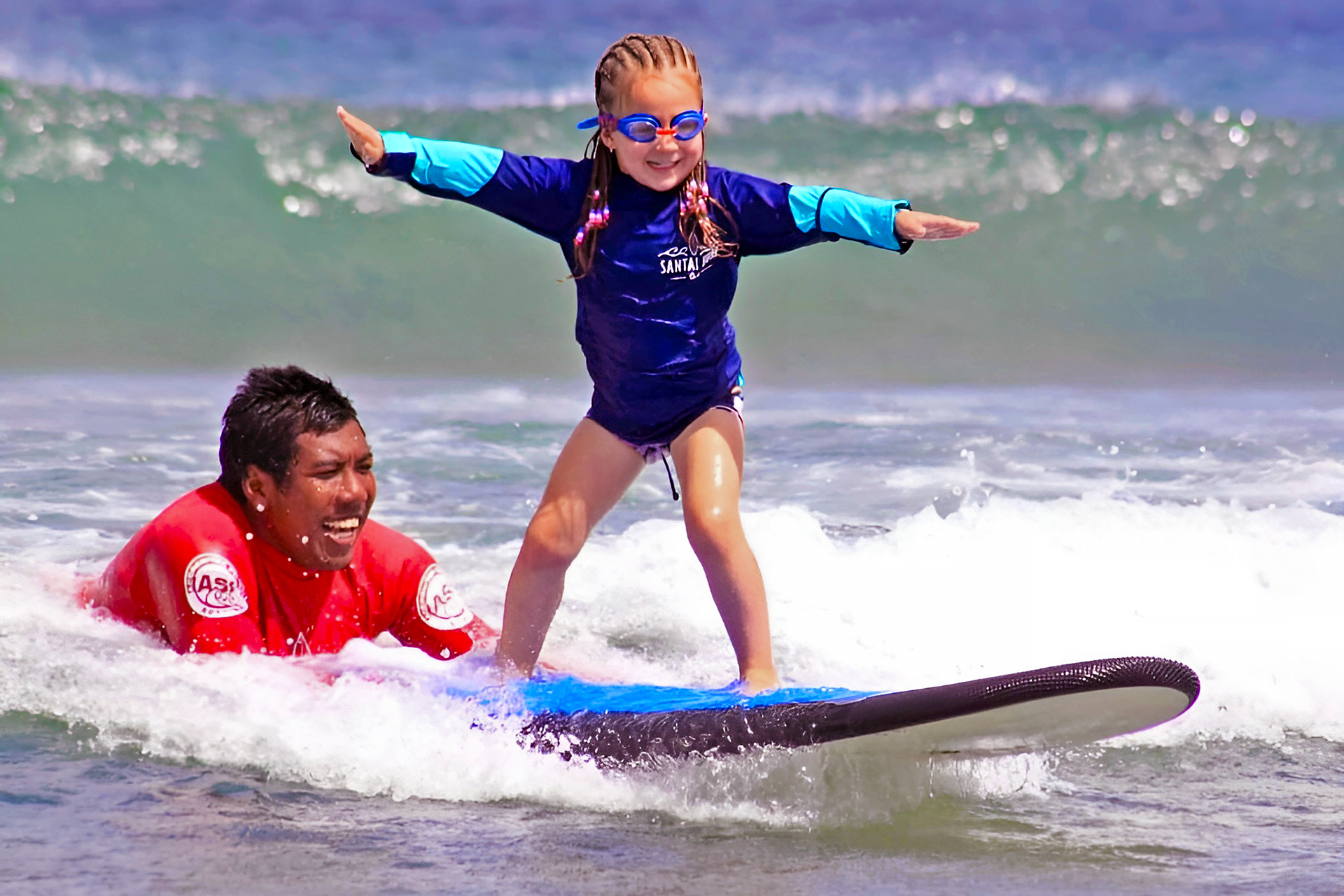
Learn to Surf in Berawa – If learning to surf in Bali has been on your bucket list for a while, you’re not alone. Many travelers arrive on the island with that quiet curiosity: “Should I try surfing this time?” The idea is tempting—warm water, rolling waves, barefoot mornings—but it’s often followed by hesitation. What if the waves are too strong? What if everyone else is already good? What if it feels chaotic, crowded, or just a bit too intense?
This is where learning to surf in Berawa begins to make sense.
Where Slow Living Meets Surf Energy
Berawa sits in a rare sweet spot along Bali’s southwest coast. It’s close enough to the island’s energy to feel alive, yet calm enough to breathe. For first-time surfers, this balance matters more than people realize. Surfing is not just about standing on a board—it’s about feeling comfortable in the environment you’re learning in. And Berawa surfing offers exactly that: approachable waves, open space, and a pace that doesn’t rush you.
Unlike some of Bali’s more famous surf areas, Berawa doesn’t demand confidence upfront. You don’t arrive feeling like you need to prove something. The beach is wide, the mood is relaxed, and the crowd is mixed—locals, long-term expats, families, beginners, and people who are just happy to be near the ocean. It’s a place where learning feels normal, not awkward. Falling off your board isn’t a failure here; it’s simply part of the morning.
This is why so many people who were unsure about surfing end up trying it in Berawa—and enjoying it.
Berawa’s unique charm lies in its balance. It’s not as hectic as central Canggu, where cafés and scooters compete for attention, and it’s not as polished or busy as Seminyak. Instead, it feels lived-in. Mornings start quietly. Afternoons slow down naturally. Evenings bring a soft hum rather than a full roar. For travelers who want both relaxation and activity, staying in Berawa feels intuitive.
That balance extends seamlessly into the surfing experience. You can wake up early, walk or ride a short distance to the beach, and join a lesson without feeling like your entire day needs to revolve around it. After a surf session, there’s no pressure to keep pushing. You can head back, shower, rest by the pool, read, nap, or simply do nothing at all. Surfing becomes part of your holiday rhythm—not the centerpiece that exhausts you, but an experience that fits naturally between coffee, rest, and sunset walks.
This is especially comforting for beginners. Many people worry that learning to surf in Bali means committing to early mornings, intense schedules, and crowded lineups. In Berawa, it doesn’t have to be that way. You choose how active your day becomes. You decide whether today is for waves or for slow living—or a bit of both.
That sense of choice is what defines the Berawa lifestyle. When you stay in Berawa, you’re not locking yourself into one type of holiday. You’re giving yourself options. You can embrace action when the mood strikes, or lean fully into calm when that feels right. Surfing fits into this flexibility beautifully.
For guests staying nearby, places like Villa Manggala quietly support this way of traveling. Without making a fuss about it, the villa offers a calm base where you can return after the ocean—space to relax, reset, and enjoy the simple pleasures that make Bali special. It’s not about being right next to the waves or branding yourself as a “surf traveler.” It’s about having a comfortable home where both energy and stillness are welcome.
In Berawa, learning to surf doesn’t feel like a performance.
There’s no audience, no pressure to progress faster than you’re ready for, no sense that you’re doing it “wrong.” It feels like what it should be: a playful, humbling, rewarding experience woven gently into your days.
And that’s what makes Berawa such a compelling place to begin. Not because it promises perfect waves or instant success—but because it allows you to learn at your own pace, supported by a lifestyle that values balance just as much as adventure.
Understanding Berawa Beach: Is It Good for Beginner Surfers?
One of the first questions people ask—often quietly, sometimes with a bit of nerves—is this: is Berawa good for beginner surfers? It’s a fair concern. Not all Bali beaches are created equal, and choosing the wrong spot for your first attempts can turn curiosity into frustration very quickly.
The reassuring answer is yes—Berawa is widely considered one of the more beginner-friendly surf beaches in the Canggu area, especially when approached with the right timing and expectations.
To understand why, it helps to look at the natural characteristics of Berawa surf conditions, rather than relying on reputation alone.
Berawa Beach is primarily a sand-bottom beach break. For beginners, this matters a lot. Sand bottoms are far more forgiving than reef breaks, both mentally and physically. Falling off your board—which you will, many times—feels far less intimidating when you know you’re landing in sand rather than coral. This simple fact lowers fear, and lower fear leads to faster learning. You relax more. You listen better. You enjoy the process.
The Berawa beach waves themselves tend to be playful rather than aggressive, especially during smaller swell periods.
Waves here often break in sections, offering short, rideable moments that are ideal for practicing pop-ups, balance, and basic board control. You’re not expected to ride long, perfect lines on your first day. What you’re learning instead is timing—when to paddle, when to stand, and how to read the water. Berawa gives you repeated chances to try without punishing mistakes.
Wave consistency is another reason beginners feel comfortable here. While no ocean is ever predictable, Berawa offers reliable conditions across much of the year. You don’t have to wait endlessly between sets, which keeps lessons moving and energy high. At the same time, the waves aren’t constantly slamming in. There’s a rhythm to the break that allows instructors to guide beginners calmly through each attempt.
Entry and exit points at Berawa are also relatively straightforward. The beach is wide, with plenty of space to spread out, and accessing the water doesn’t require navigating narrow channels or sharp reef edges. This reduces anxiety, especially for first-timers who are still getting used to holding a board, reading the waves, and managing their own movements in the surf zone.
When people compare Berawa to nearby surf spots, the differences become clearer.
Batu Bolong, for example, is also popular with beginners, but it’s often more crowded. The sheer number of boards in the water can feel overwhelming, particularly during peak hours. Beginners there sometimes spend more time worrying about getting in someone’s way than actually learning.
Echo Beach, on the other hand, is known for stronger, more powerful waves. While it’s a fantastic spot for experienced surfers, it can feel intimidating for those just starting out. The waves break faster, the energy is heavier, and mistakes carry more consequence. Many instructors will avoid Echo for true beginners unless conditions are exceptionally small and calm.
Berawa sits comfortably between these two extremes. It offers enough space to breathe, waves that are active but manageable, and a general atmosphere that supports learning rather than performance.
Of course, conditions change daily. Tide, swell direction, and time of day all play a role. This is why learning with local surf instructors in Berawa makes such a difference—they understand when and where the beach is at its most beginner-friendly. They know which sections work best on certain tides and when to shift slightly up or down the beach for safer, cleaner waves.
For adults and children alike, this adaptability matters.
Berawa doesn’t lock you into one narrow window of opportunity. It gives you options. And that flexibility is exactly what reduces fear and builds confidence.
So if you’re wondering whether Berawa is a good place to begin, the answer isn’t just yes—it’s yes because it allows beginners to feel at ease. And when you feel at ease in the ocean, learning to surf becomes something you look forward to, not something you endure.
Berawa Surf Conditions Explained
Once you’re comfortable with the idea that Berawa is beginner-friendly, the next natural question is more practical: when is the best time to surf in Berawa? Understanding seasons, tides, and timing doesn’t mean you need to become a surf nerd overnight. It simply helps you show up at the right moment—when learning feels easier, calmer, and more enjoyable.
Let’s break it down in a way that actually helps.
Berawa Surfing Seasons: What Changes, What Doesn’t
Bali has two main seasons: dry season (roughly April to October) and wet season (November to March). When it comes to Berawa surfing seasons, both are workable for beginners—but they feel different.
During the dry season, swells are more consistent and energy tends to be stronger. This is great news for experienced surfers chasing clean lines, but beginners might need a bit more guidance. The upside? The waves are more predictable, and conditions are often glassy in the early morning. With a good instructor, beginners can still thrive here, especially on smaller swell days.
The wet season, often underestimated, is actually very friendly for learning. Swells are generally smaller and less aggressive, and there are many days when the ocean feels softer and more forgiving. Yes, you might get an afternoon rain shower, but mornings are often calm and uncrowded. For first-timers, these gentler conditions can feel far less intimidating. Many beginners find they progress faster during this time simply because they’re more relaxed in the water.
The key takeaway?
There isn’t one “right” season to learn. The surf conditions in Berawa offer learning opportunities year-round—you just adapt slightly depending on the month.
Tides: Why Timing Beats Brute Courage
Tides play a surprisingly big role in how Berawa feels under your board. While exact conditions vary daily, beginners often find mid-tide to high tide more comfortable. The water covers more sand, waves soften slightly, and wipeouts feel gentler.
Low tide can still be surfable, but waves may break a bit faster and closer to shore. For confident beginners, that’s manageable. For first-timers, instructors often prefer waiting until the tide fills in to create smoother, slower waves.
This is where local knowledge matters more than Google charts. Surf schools in Berawa adjust lesson times based on tides, not just convenience. When you learn here, you’re not guessing—you’re being guided into the ocean at its most welcoming.
Best Times of Day: The Quiet Magic of Early Mornings
Ask anyone who surfs regularly and you’ll hear the same advice: mornings are gold.
Early morning sessions in Berawa often bring calmer winds, cleaner wave faces, and fewer people in the water. The beach feels peaceful, the sun rises gently, and everything moves at a slower pace. For beginners, this environment is invaluable. You’re not rushed. You’re not dodging crowds. You’re simply learning, one wave at a time.
Midday can still work, especially during quieter periods or smaller swell days, but wind tends to pick up. Late afternoons are lively and fun to watch, yet they’re usually better for confident surfers than for first lessons.
Crowd Patterns: When Space Equals Confidence
Berawa does get busy—but it’s rarely overwhelming if you choose your timing well. Mornings are generally quieter, while late afternoons attract more experienced surfers finishing work or chasing sunset sessions.
For beginners, fewer people in the water means more room to focus. It’s easier to listen to your instructor, easier to paddle without pressure, and easier to laugh off mistakes.
Why Beginners Don’t Need “Perfect” Waves
Here’s a truth many first-time surfers don’t realize: perfect waves are overrated when you’re learning.
You don’t need long, flawless rides. You need manageable waves that give you repetition. Small to medium waves, gentle sections, and forgiving conditions teach fundamentals far better than dramatic surf ever could.
Berawa excels at this. It doesn’t demand performance. It supports progress.
When you stay in Berawa, especially somewhere close to the beach, you gain flexibility. You can surf when conditions feel right, rest when they don’t, and try again tomorrow without pressure. That rhythm—surf, rest, repeat—is exactly how confidence grows.
Learning to Surf in Berawa as a Complete Beginner
If you’ve never surfed before, the idea of paddling into the ocean with a board can feel equal parts exciting and intimidating. That’s completely normal. The good news? Learning to surf in Berawa is about as gentle an introduction to surfing as you’ll find in Bali—especially if it’s your very first time.
This is not a place where you’re expected to perform. It’s a place where you’re allowed to try.
What a First Surf Lesson in Berawa Actually Feels Like
A lot of beginners imagine chaos: big waves, shouted instructions, and constant wipeouts. In reality, beginner surf lessons in Berawa are calm, structured, and surprisingly supportive.
Your first lesson usually starts on the sand. You’ll meet your instructor, get fitted with a soft-top board (big, stable, forgiving), and talk through the basics. How to lie on the board. How to paddle. How to pop up. No rush. No pressure. You’ll probably laugh at yourself—and so will everyone else, including your instructor.
Once you head into the water, you’re not going far. Lessons take place in shallow areas where you can stand comfortably. Waves are chosen carefully: small enough to feel safe, strong enough to give you momentum. The instructor stays close, often physically guiding the board into waves at first.
This hands-on support is one reason surfing lessons in Berawa feel less intimidating than at more famous breaks. You’re not battling crowds or strong currents. You’re learning in a controlled, human-scale environment.
Land Drills, Water Time, and Real Learning
A typical lesson balances explanation with experience. You’ll practice popping up on the beach several times before trying it in the water. Then you’ll try again. And again. Falling is part of the process—and expected.
Most beginners don’t stand on their very first wave. Some do. Many don’t. Both outcomes are completely fine.
What matters is repetition. Catching waves. Feeling the board glide. Understanding timing. These early sensations are what build real progress—not Instagram-worthy rides.
Berawa’s waves help here. They’re consistent without being aggressive, giving beginners more chances to try within a single session. You’re not waiting endlessly between waves, and you’re not being overwhelmed either.
Progress Without Pressure (No False Promises)
Let’s be honest: surfing is harder than it looks. Anyone who tells you otherwise is selling something.
That said, beginners often surprise themselves in Berawa. Many people manage to stand for a second or two by the end of their first lesson. Some catch a clean ride. Others simply feel more comfortable in the water—and that’s a win too.
What Berawa does well is remove unnecessary pressure. You’re not surrounded by elite surfers carving perfect lines. You’re not at a break known for heavy waves or strict surf etiquette. You’re somewhere that quietly encourages learning.
Progress here feels organic. One small breakthrough at a time.
Why Berawa Feels Safer Than Famous Breaks
Places like Batu Bolong or Echo Beach have their charm—but for complete beginners, they can feel overwhelming. More surfers, stronger waves, and more unspoken rules.
Berawa, by contrast, feels open. There’s space to breathe. Instructors have room to work. Beginners aren’t constantly in the way of experienced surfers.
This matters more than most people realize. Feeling safe—emotionally as much as physically—makes learning faster and more enjoyable.
When you learn to surf in Berawa, you’re not just learning a sport. You’re easing into a rhythm. You can surf in the morning, rest by the pool later, and decide tomorrow if you want to go again. No pressure. No rush.
That balance is what makes Berawa such a welcoming place to begin.
Surfing in Berawa with Kids & Families
Learning to surf in Berawa with kids is less about chasing waves and more about creating a shared moment your family will remember long after the sand has been washed off your feet. This is where Berawa quietly shines. It’s one of the few places in Bali where family surfing feels genuinely approachable, not forced, rushed, or intimidating.
For parents, the biggest question is always safety. Berawa answers that well.
The beach has a sand-bottom break, which means no sharp reef lurking underfoot — a huge relief when kids are tumbling, laughing, and falling repeatedly (as they should). The waves tend to roll in with enough push to be fun, but not so much power that beginners feel overwhelmed. It’s one of the main reasons many instructors recommend Berawa for kids surf lessons over busier breaks like Echo Beach.
Is Berawa suitable for children learning to surf?
In short: yes — with the right expectations and guidance.
Most surf schools in Berawa are comfortable teaching children from around 6–7 years old, depending on confidence and swimming ability. Lessons are typically structured with a higher instructor-to-child ratio, often one-on-one or one instructor for two kids at most. This allows for constant supervision, hands-on assistance, and encouragement rather than pressure.
Lessons usually start on the sand with simple, playful explanations. Kids learn how to lie on the board, pop up safely, and understand basic ocean awareness — where to sit, when to paddle, and how to fall without fear. Only then do they move into the water, often staying very close to shore where parents can watch comfortably from the beach.
Turning surfing into a family experience
One of the most beautiful things about learning to surf in Berawa is that it doesn’t have to be a “kids-only” activity. Many families choose to book back-to-back or shared lessons, where parents and children learn side by side. The waves here allow that flexibility — adults can practice slightly deeper while kids stay closer to shore, all within the same stretch of beach.
This shared experience often becomes a highlight of the trip. Parents cheer from the water. Kids celebrate their first stand-up ride. There’s laughter, falling, and that collective sense of “we did this together.” Surfing stops being a sport and becomes a memory.
Confidence over performance
Good surf instructors in Berawa understand something important: children don’t need to “perform.” They need to feel safe, supported, and proud of small wins. A successful lesson isn’t measured by how long they stand on the board, but by whether they come out of the water smiling and asking, “Can we do that again tomorrow?”
Berawa’s calmer energy helps here. There’s less crowd noise, fewer competing surf schools packed into one narrow break, and less pressure to keep up with advanced surfers. Kids are allowed to learn at their own pace — and parents can relax knowing the environment supports that.
Why staying nearby matters for families
When learning to surf in Berawa with kids, proximity makes a real difference. Early mornings are often the best time for lessons, when the wind is light and the beach feels calm. Staying close means no rushed breakfasts, no long scooter rides with sleepy children, and no stress if someone suddenly needs a break.
After the lesson, families can head straight back to the villa for snacks, pool time, or naps — which is exactly how kids recharge. This rhythm turns surfing into a joyful part of the holiday, not an exhausting event built around logistics.
In Berawa, surfing with kids feels possible, playful, and natural. It’s not about raising future pros. It’s about standing on a board for the first time, feeling the ocean move, and sharing that moment together — barefoot, salty, and smiling.
Reputable Surf Schools Operating in Berawa
Choosing the right surf school is often the moment where excitement turns into hesitation — especially if it’s your first time, or if you’re booking lessons for your children. The good news is that Berawa surf lessons are generally run by experienced, well-established local operators who understand beginners deeply. Surfing here isn’t treated as a spectacle; it’s treated as a skill to be introduced calmly, safely, and with respect for the ocean.
A teaching culture built around beginners
Most surf schools operating in Berawa share a similar teaching philosophy: confidence first, technique second, progression third. Lessons rarely begin in the water. Instead, instructors take time on the sand to explain how waves work, how boards behave, and how to fall safely. This approach is especially reassuring for adults who worry about embarrassment and for parents who want to know their children are being properly guided.
Instructors in Berawa tend to be patient rather than pushy. There’s no pressure to “stand up fast” or prove anything. If a student needs extra time paddling or simply getting comfortable being in the water, that pace is respected. This makes surfing lessons in Berawa Bali feel supportive rather than intimidating — a big reason many beginners prefer this area over more performance-driven surf zones.
Experience with kids and families
What sets many Berawa surf schools apart is their strong experience working with children and families. Instructors are used to adjusting their tone, body language, and lesson structure based on age. For kids, lessons are often broken into short, playful segments with frequent encouragement. Safety rules are repeated gently and consistently, not barked out.
Parents are usually invited to watch from the beach or even wade in nearby, which helps children feel secure. For family surfing in Berawa, this approach matters. It turns the lesson into something collaborative rather than something kids are “handed off” to.
Adults, on the other hand, often appreciate the calm, non-judgmental energy. Many instructors in Berawa are former competitive surfers who deliberately shifted into teaching because they enjoy introducing people to surfing — not just coaching advanced riders.
Equipment that supports learning
Another reassuring aspect of Berawa surf lessons is the equipment quality. Schools typically use large, soft-top boards designed specifically for beginners. These boards are more stable, more forgiving, and far safer for learning. Leashes, rash guards, and sun protection are usually included, which removes a lot of guesswork for first-timers.
Instructors are also attentive to matching board size to body type and confidence level. This may seem like a small detail, but it dramatically affects how enjoyable a first lesson feels. Good schools know that the right board can be the difference between frustration and success.
Why Berawa surf schools suit beginners so well
Perhaps the most important thing to know is this: Berawa surf schools operate in an environment that supports their teaching style. The beach layout, wave behavior, and crowd levels allow instructors to space lessons out, choose gentler peaks, and avoid chaos. This means your lesson won’t feel rushed or squeezed between advanced surfers.
For guests staying nearby, especially families or first-time surfers, this creates peace of mind. You’re not gambling on an unfamiliar experience — you’re stepping into a learning culture that has quietly been refined over years.
When you learn to surf in Berawa, the schools here don’t just teach you how to stand on a board. They teach you how to feel comfortable in the ocean. And that confidence — especially for kids — is what makes people come back for a second lesson, then a third, and sometimes an entirely new relationship with the sea.
Staying Near the Beach: Why Location Matters When Learning to Surf
When people think about learning to surf, they usually picture the water — the board, the waves, the moment of standing up. What’s often overlooked is everything around those moments. Where you stay plays a quiet but powerful role in how enjoyable the experience actually feels, especially when you’re learning, especially when you’re with kids.
This is where choosing to stay near Berawa beach makes a real difference.
Early mornings without transport stress
Surfing, particularly for beginners, works best early in the day. The wind is lighter, the waves are cleaner, and the beach feels calmer. But early mornings lose their magic quickly when they involve car rides, traffic, or rushing to meet an instructor on time.
Staying close means mornings can stay slow. You wake up, stretch, have a light breakfast, and walk or take a short ride to the beach. No negotiating with sleepy kids. No wondering if traffic will be kind. This ease lowers anxiety — and learning something new always goes better when you’re relaxed.
For adults, this often means better focus and energy. For children, it means they arrive curious instead of cranky.
The gift of coming “home” between sessions
Surf lessons aren’t just about time in the water. They’re physically demanding in ways beginners don’t always expect. Arms tire quickly. Balance muscles wake up. Even short sessions can leave you happily exhausted.
This is why staying nearby matters. When your lesson ends, you’re not locked into staying out. You can head back, shower, snack, nap, or float in the pool. Kids can nap when they need to, not when the schedule allows. Adults can recover without feeling rushed into the next activity.
This in-between time is often where learning sinks in. Bodies rest. Confidence settles. Smiles replace effort.
A rhythm that works for families
For families, proximity creates a rhythm that actually respects everyone’s needs. One child might surf while another builds sandcastles. One parent might join the lesson while the other watches from the shade. Later, roles can switch — easily — because you’re close to home.
Staying at Villa Manggala Berawa, this rhythm feels natural. Morning surf. Midday rest. Afternoon play. No packing up for long trips. No pressure to “make the most” of the day because everything is already right there.
Surf, rest, repeat — without burnout
Learning to surf isn’t about cramming as many lessons as possible into a short stay. It’s about repetition with recovery. Surf a little. Rest a lot. Return when you feel ready.
Being close to the beach makes this possible. You can decide in the moment. One more session? Or maybe tomorrow. The ocean isn’t going anywhere.
This is the quiet luxury of location. Not convenience for convenience’s sake, but the freedom to let your days breathe. When people ask where to stay in Berawa for learning to surf, the answer isn’t about features — it’s about flow.
And when the flow is right, learning becomes less about effort and more about enjoyment.
Villa Manggala as a Base for Surf & Slow Living
Not every place near the beach needs to shout surf culture to work beautifully for surfers. In fact, when you’re learning — or learning alongside children — the opposite is often better. What you need is a calm base that supports action when you want it, and rest when you don’t.
This is where Villa Manggala Berawa fits so naturally into the picture.
A calm-first place that welcomes activity
Villa Manggala isn’t designed around a single identity. It’s not trying to be a surf lodge, a party house, or a retreat that locks you into silence. Instead, it works because it gives you options.
You can wake up early for a surf lesson. Or you can sleep in and go later. You can spend a morning at the beach and an afternoon doing nothing at all. Staying in Berawa gives you proximity to the ocean, but Villa Manggala gives you permission to slow down.
This balance matters more than most people expect.
Space for boards, gear, and breathing room
When learning to surf, even as a beginner, gear tends to multiply quickly — soft-top boards, rash guards, towels, sunscreen, sandy everything. A cramped hotel room can make this feel chaotic fast.
As a Berawa family villa, Villa Manggala offers something simple but valuable: space. Space to leave boards without tripping over them. Space to rinse off, hang things to dry, and reset between sessions. Space that keeps surf days from feeling messy.
For families, this matters even more. Less clutter means less friction. And less friction means better moods — for kids and parents alike.
Post-surf downtime that actually feels restorative
Surfing is exhilarating, but it’s also tiring. What happens after the session often determines how the rest of the day unfolds.
At Villa Manggala, post-surf downtime feels easy. Kids drift between the lawn and the pool, still buzzing from the ocean. Parents stretch out, read, nap, or float quietly in the water. No one has to leave the space to recover.
This is slow living in practice — not inactivity, but recovery built into the day.
A place where kids play while parents pause
One of the most underrated aspects of learning to surf as a family is what happens when not everyone is in the water at the same time. Someone is always resting, watching, or sitting out.
Villa Manggala supports this beautifully. While one parent takes a lesson or returns from the beach, the other can stay back with the kids — safely, comfortably, without boredom setting in. Children play freely. Parents get moments of stillness.
This flexibility makes it easier to say yes to surf lessons without feeling like the whole day revolves around them.
Choosing when to be active — and when not to
Perhaps the biggest advantage of using Villa Manggala as your base is that nothing is forced. You’re close enough to act on inspiration, but far enough from pressure.
You can stay in Berawa and let the days decide themselves. Some days are for surfing. Some are for pool time, walks, or long breakfasts. Some are a mix of everything.
Learning to surf doesn’t need to dominate your holiday. Here, it simply becomes one chapter — supported by space, calm, and the freedom to move at your own pace.
And for many guests, that balance is exactly what makes the experience memorable.
A Sample Surf-Focused Day in Berawa
One of the easiest ways to understand why people love to learn to surf in Berawa is to imagine how a typical day actually unfolds here. Not rushed. Not packed. Just a natural rhythm where surfing in Berawa fits into everyday life instead of taking it over.
Early coffee, unforced mornings
The day usually starts quietly. The air is cooler, the streets are calm, and Berawa’s café scene is just waking up. Some guests step out for a short walk or scooter ride to grab a proper coffee; others enjoy a slow start at the villa. There’s no pressure to move fast. This is part of the Berawa lifestyle — mornings belong to you.
For families, this early window is especially gentle. Kids are rested, spirits are high, and everyone feels open to trying something new. Read more about Berawa for kids.
Morning surf lesson while energy is fresh
Most beginner-friendly surf lessons in Berawa run best in the morning. The waves are softer, the beach is less crowded, and instructors have more time to focus on each student.
Adults head into the water feeling curious rather than nervous. Kids take their cues from the calm energy around them — laughing, falling, standing up, and falling again. Nobody’s chasing perfection. The goal is simple: feel the ocean, enjoy the process.
By late morning, everyone is pleasantly tired in the best way.
Villa downtime that resets the day
This is where Berawa really shines. Instead of pushing on, the day naturally slows. Back at the villa, boards are rinsed, swimsuits are swapped for dry clothes, and lunch happens without fuss.
Kids play. Parents rest. Some nap, some float in the pool, some do absolutely nothing. This downtime isn’t a break from the holiday — it is the holiday.
Late afternoon calm & sunset walks
As the heat softens, the day gently reopens. A short walk toward the beach, sandy feet, and long shadows stretching across Berawa Beach. Sunsets here feel relaxed rather than performative — no rushing, no crowd pressure.
Easy dinners, early nights (or not)
Dinner is simple. A nearby café, something familiar for kids, something satisfying for adults. Some nights end early. Some don’t. Either way feels right. Read more about gastronomic experience in Berawa and surrounding area.
This is what a surf-focused day in Berawa looks like: balanced, forgiving, and quietly memorable.
Practical Tips for Learning to Surf in Berawa
If you’re planning to learn to surf in Berawa, a little practical know-how goes a long way. Surfing doesn’t need complicated preparation, especially for beginners, but understanding a few basics can make your first experience far more relaxed and enjoyable — particularly if this is your first time trying beginner surfing in Bali.
What to wear (keep it simple)
You don’t need specialized surf gear to start. Most surf lessons in Berawa include soft-top boards and rash guards, so you can focus on learning rather than shopping. Comfortable swimwear that stays in place is key. For women, one-piece swimsuits or sporty bikinis tend to feel more secure. For men, boardshorts are perfect.
Rash guards aren’t about style — they’re about comfort. They prevent chafing, offer extra sun protection, and keep you warmer during longer sessions. If you’re surfing with kids, long-sleeve rash guards are especially helpful.
What not to worry about
This is where many first-timers overthink things. You don’t need to be super fit, strong, or fearless. You don’t need to “look cool” on a board. Falling is part of the experience — everyone does it, repeatedly, and usually with laughter.
You also don’t need to catch dozens of waves to feel successful. Standing up once or twice is already a win. The real goal when you learn to surf in Berawa is comfort in the water, basic balance, and confidence — not performance.
Budget expectations for beginners
Compared to many surf destinations worldwide, surf lessons in Berawa are reasonably priced. Expect fair, transparent rates that usually include the instructor, board, and sometimes transport along the beach. Private lessons cost more, but they can be especially valuable for kids or nervous beginners.
Families often find that a short series of lessons over several days works better than a single intense session — more progress, less pressure.
Safety & sun care (don’t skip this)
Berawa is beginner-friendly, but it’s still the ocean. Always listen to your instructor, stay within the designated learning zone, and avoid surfing alone as a beginner.
Sun care matters more than people expect. Early mornings help, but sunscreen (reef-safe), hats for before and after sessions, and hydration are essential. The Bali sun doesn’t feel aggressive — until it does.
One final tip: pace yourself. Surfing is physical in subtle ways. Give your body time to rest, enjoy the villa downtime, and come back refreshed. That balance is what makes learning to surf in Berawa feel natural instead of exhausting.
In Berawa, You Choose the Pace
Learning to surf often gets framed as a bold, all-in adventure — early alarms, crowded beaches, aching muscles, and a sense that you need to “commit” your entire holiday to the sport. But that’s not how it feels when you learn to surf in Berawa. Here, surfing doesn’t take over your trip. It simply becomes part of it.
Berawa offers something rare in Bali: a place where action and ease coexist naturally. The waves are friendly enough to welcome beginners, yet consistent enough to feel real. Surf schools are experienced without being pushy. The beach has energy, but it never overwhelms. And just a few steps away, life slows down again — cafés, quiet streets, afternoon shade, and space to breathe.
That balance is what gives you confidence. When you stay in Berawa, there’s no pressure to prove anything. You can wake up early for a lesson or sleep in and watch the ocean from afar. You can surf once, fall a lot, laugh, and call it a win — or you can come back the next day because it felt good. For families, this flexibility matters even more. Kids can try surfing in short, positive bursts, then retreat to play, rest, or swim. Adults can share the experience without turning it into a physical marathon.
Berawa makes learning feel approachable because the environment supports it. There’s no long commute to the beach. No racing against traffic. No need to “maximize” every hour. Surf, rest, repeat — or don’t. That choice is always yours.
And that’s where staying somewhere like Villa Manggala Berawa quietly completes the picture. Not as a surf camp or a high-energy hub, but as a calm base that adapts to your rhythm. A place where boards can dry on the side, kids can nap after lessons, and afternoons can dissolve into pool time or quiet reading. You can step into action when you want — and step back just as easily.
In Berawa, learning to surf doesn’t demand your whole holiday. It doesn’t rush you or define you. It fits around slow breakfasts, relaxed evenings, and moments you didn’t plan for.
When the waves are close, the pace is gentle, and everything you need is within reach, the experience becomes lighter. More human. More memorable.
Staying at Villa Manggala means the waves, the rest, and the rhythm are already taken care of — all you have to do is decide how much of the ocean you want to meet today.