

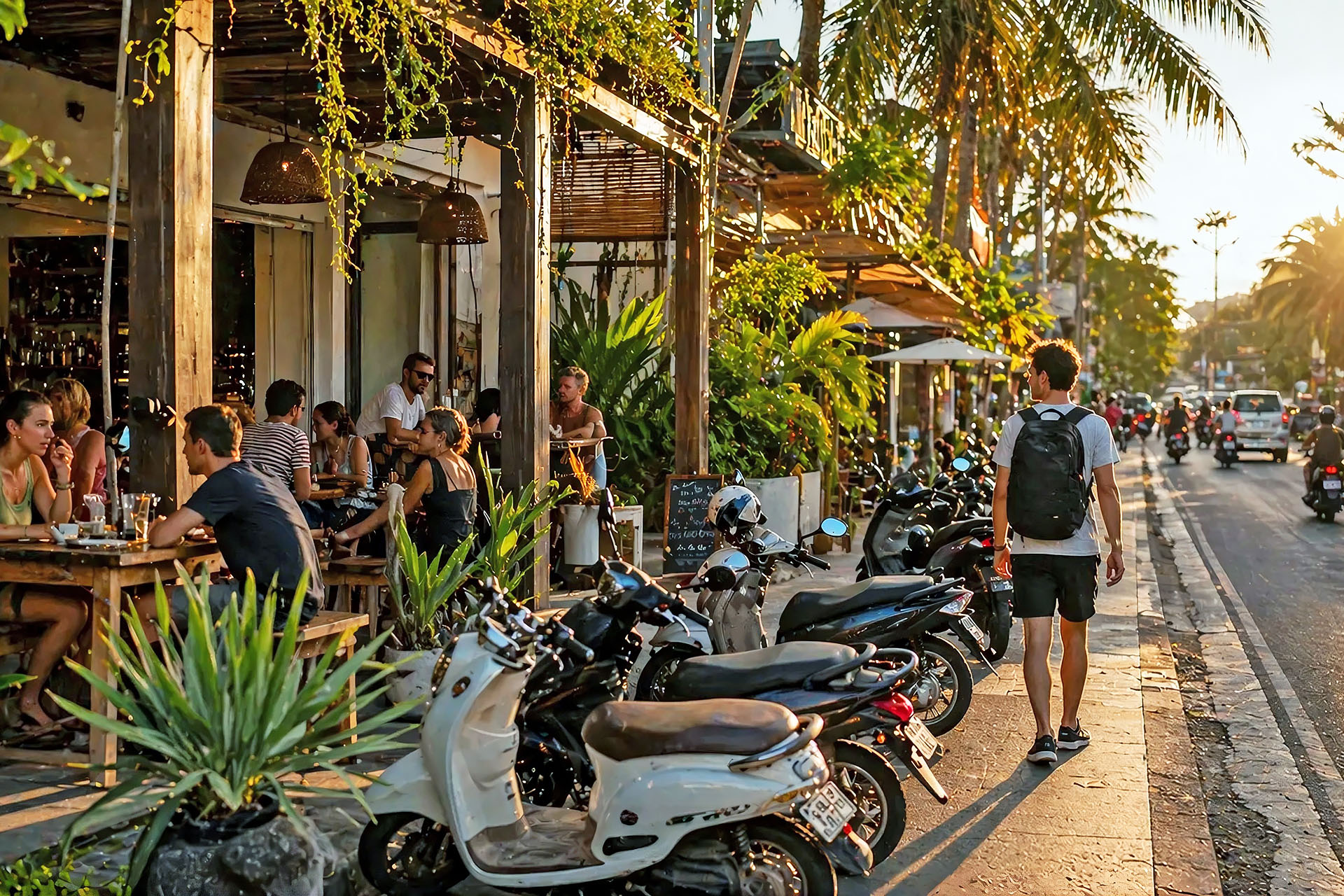
Walkable Area in Berawa Bali – One of the biggest surprises many visitors encounter during their Bali holiday has nothing to do with the beaches, the weather, or even the food. It is the traffic.
For years, Bali’s southwest coast has been among the island’s most desirable places to stay. Areas such as Seminyak, Canggu, and Berawa have become known for their beach clubs, restaurants, cafés, surf breaks, boutique shops, and vibrant lifestyle scene. But as these destinations have grown in popularity, so too has the amount of traffic connecting them.
Today, it is not uncommon for what appears to be a short journey on the map to take significantly longer than expected, particularly during sunset hours, weekends, and peak holiday seasons.
For travelers who only have a few precious days in Bali, those lost minutes add up quickly. After all, holidays are not measured by how much time you spend sitting in a car or on the back of a scooter. They are measured by experiences, conversations, meals shared with family and friends, sunsets watched from the beach, and the simple pleasure of exploring a destination at your own pace.
This is why walkability has quietly become one of the most valuable qualities of a great holiday destination.
Why Walkability Matters in Bali
Being able to step outside your accommodation and simply walk to where you want to go changes the entire travel experience. It removes friction from your day. It allows plans to remain spontaneous. It encourages exploration. Most importantly, it gives you more time to enjoy the things you actually came to Bali for.
That is one of the reasons why a growing number of travelers are discovering the appeal of a walkable area in Berawa Bali.
While many parts of the island require frequent transport arrangements, Berawa remains one of the few neighborhoods where daily life can still happen comfortably on foot. Within a relatively compact area, visitors can access an impressive variety of experiences without needing to constantly battle traffic.
A morning coffee run might take just a few minutes. Brunch is often within easy walking distance. Grocery stores, bakeries, convenience shops, restaurants, beach clubs, fitness studios, and even the beach itself can all be reached without turning every outing into a transportation exercise.
The result is a style of travel that feels more relaxed and more connected.
Rather than planning your day around traffic conditions, you can simply follow your mood. Walk to a café for breakfast. Stop at a bakery on the way back. Spend a few hours by the pool. Head down to the beach for sunset. Choose a restaurant for dinner based on what sounds good at that moment instead of what is easiest to reach.
This flexibility becomes especially valuable for families, long-stay visitors, remote workers, and anyone who prefers a slower, more enjoyable pace of travel.
In many ways, staying in Berawa Bali feels less like visiting a tourist destination and more like temporarily living in a highly desirable neighborhood. The area combines the energy of Canggu, the convenience of Seminyak, and the laid-back atmosphere that people often imagine when planning a Bali holiday.
And while scooters remain a practical way to explore wider areas of the island, many guests quickly realize they do not actually need one for most of their daily activities in Berawa.
That is a rare luxury in Bali today. Perhaps the greatest advantage of all is that walkability changes how a destination feels. You notice more details. You discover hidden cafés. You find restaurants by accident. You become familiar with the streets around your villa. The neighborhood begins to feel personal rather than simply somewhere you pass through.
Berawa is particularly good at creating this feeling. It is a place where the beach, cafés, restaurants, grocery stores, and beach clubs exist as part of everyday life rather than isolated attractions spread across a large area. Everything feels connected. Everything feels accessible.
And for travelers who value convenience, flexibility, and making the most of every day in Bali, that accessibility may be one of the most compelling reasons to choose Berawa in the first place.
The Traffic Problem Most Visitors Don’t Expect
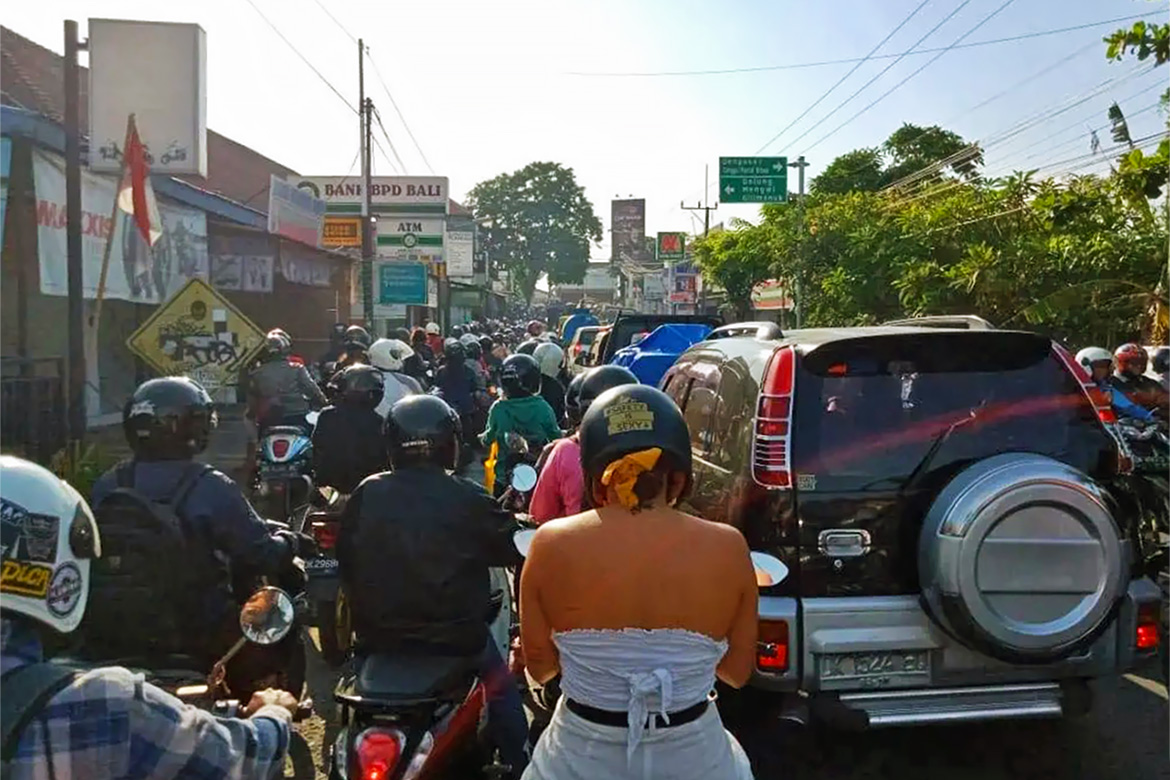
For many first-time visitors, Bali looks surprisingly small on the map. A quick glance at Google Maps might suggest that moving between popular destinations should be easy. Seminyak, Berawa, Batu Bolong, Pererenan, and other well-known areas all appear relatively close to one another. Distances are often measured in only a few kilometers.
What catches many travelers off guard is that distance and travel time in Bali are often two very different things.
The island’s popularity has grown dramatically over the past decade, particularly along the southwest coast where tourism, hospitality, and residential developments continue to expand. While this growth has brought an incredible variety of cafés, restaurants, beach clubs, villas, and lifestyle experiences, it has also created one challenge that almost every visitor eventually encounters: Bali traffic.
It is not necessarily a problem every hour of the day, nor is it unique to Bali. However, visitors who imagine effortlessly moving between attractions often discover that certain roads have become significant bottlenecks, particularly during busy periods.
And nowhere is this more noticeable than around the Seminyak-Canggu corridor.
Seminyak’s Popularity Comes With Congestion
Seminyak remains one of Bali’s most established lifestyle destinations. The area is packed with boutique shopping, restaurants, beach clubs, spas, cafés, and nightlife venues. For many travelers, it remains a must-visit part of the island. The challenge is that Seminyak’s popularity has grown faster than its road network.
During peak hours, especially around sunset and dinner time, traffic can slow significantly. Short journeys can take much longer than expected, particularly around major intersections and commercial streets.
This is not necessarily a reason to avoid Seminyak. Rather, it is a reminder that convenience in Bali is often determined more by location than distance. Many visitors spend their holidays repeatedly moving between accommodation, restaurants, beach clubs, and attractions, only to realize that a meaningful portion of each day is being spent in transit.
The Famous Jalan Raya Canggu Bottleneck
If there is one road that has become symbolic of modern traffic challenges on Bali’s southwest coast, it is Jalan Raya Canggu. This major artery connects several popular neighborhoods and serves as an important route for residents, tourists, delivery vehicles, and businesses. As a result, it frequently becomes congested.
Travelers staying in different parts of Canggu often find themselves using this road multiple times a day. What appears to be a quick trip to breakfast, a beach club, or a dinner reservation can sometimes become a slow-moving journey through dense traffic. This is one reason why searches related to how to avoid traffic in Canggu have become increasingly common.
Visitors are not necessarily looking to avoid Canggu itself. They simply want a way to enjoy the area’s lifestyle without spending so much time navigating its busiest roads.
Lost Holiday Time Adds Up Quickly
Traffic affects more than transportation. It affects how people experience a destination. Imagine spending twenty minutes getting to breakfast, another twenty minutes returning to your villa, then repeating the process later for lunch, sunset drinks, and dinner. Individually, each journey may seem manageable.
Collectively, they consume a surprising amount of time. Over the course of a week-long holiday, those extra minutes can add up to several hours. Hours that could have been spent by the pool. Hours that could have been spent at the beach. Hours that could have been spent exploring cafés, enjoying a sunset, or simply relaxing.
Most travelers do not come to Bali to sit in traffic. They come for the lifestyle that Bali promises. That is why choosing the right neighborhood often has a greater impact on a holiday than choosing the right attraction.
Transportation Fatigue Is Real
There is another effect that receives less attention but influences travel experiences significantly: transportation fatigue.
At the beginning of a holiday, arranging rides, checking maps, and navigating unfamiliar roads may feel exciting. By the fourth or fifth day, however, it can start feeling repetitive. Every meal requires transportation planning. Every outing involves checking traffic conditions. Every spontaneous idea comes with the question: “How long will it take to get there?”
Eventually, convenience becomes a luxury.
The ability to simply walk out the door and arrive where you want to be within minutes begins to feel more valuable than many travelers initially realize. And this is precisely where Berawa starts to stand apart from many neighboring areas. Rather than organizing each day around transportation, visitors can organize their days around experiences. The difference may seem subtle at first, but it fundamentally changes how a Bali holiday feels.
In the next section, we’ll explore why Berawa has become one of the most practical and enjoyable alternatives for travelers who want to enjoy Bali’s lifestyle while spending less time on the road and more time living it.
Why Berawa Feels Different
If traffic has become one of the biggest frustrations for travelers exploring Bali’s southwest coast, then Berawa has quietly become one of the most appealing solutions. Not because it completely escapes the realities of modern Bali. And certainly not because there are no vehicles, scooters, or busy streets.
Rather, Berawa feels different because of how the neighborhood is organized. The area has developed in a way that allows visitors to access many of the things they want most—cafés, restaurants, beach clubs, grocery stores, fitness studios, convenience shops, and the beach itself—without constantly needing to move between distant locations.
This creates a very different experience compared to many other popular destinations on the island.
For travelers who are staying in Berawa Bali, daily life often feels simpler, more flexible, and far less dependent on transportation.
A Compact Neighborhood That Makes Sense
One of Berawa’s greatest strengths is its scale. The neighborhood is large enough to offer variety yet compact enough to remain practical.
In many destinations, attractions are spread across different districts. You may stay near the beach but far from restaurants. You may be close to nightlife but distant from grocery stores. You may have beautiful accommodation but need transportation every time you want coffee or breakfast. Berawa manages to avoid many of these compromises.
The area is remarkably dense with amenities. Within a relatively small radius, visitors can find specialty coffee shops, brunch cafés, international restaurants, local warungs, beach clubs, supermarkets, pharmacies, bakeries, fitness facilities, spas, and surf-friendly beaches.
Because these places are located close to one another, moving around feels intuitive rather than exhausting. You spend less time figuring out how to get somewhere and more time actually enjoying where you are.
A True Mixed-Use Neighborhood
Another reason Berawa feels different is that it does not function purely as a tourist zone. It feels like a real neighborhood. Residents, remote workers, business owners, long-stay visitors, and holidaymakers all share the same streets. The result is a vibrant but relatively balanced environment where daily life continues beyond tourism.
This mixed-use character contributes significantly to the overall experience. A morning walk may take you past school drop-offs, local bakeries opening for the day, surfers heading toward the beach, families shopping for groceries, and travelers searching for their first coffee.
Nothing feels isolated.
Instead of having separate “tourist areas” and “local areas,” Berawa blends many aspects of everyday life together.
That blend is a major part of what creates the distinctive Berawa lifestyle Bali has become known for. Visitors often describe the area as energetic without being overwhelming and lively without feeling chaotic.
Beach, Dining, and Daily Living Exist Side by Side
Perhaps the most impressive thing about Berawa is how seamlessly different parts of life connect with one another. In some destinations, beach days and dining experiences feel separate. You travel to the beach. Then you travel somewhere else for lunch. Then you move again for dinner. Then again for nightlife.
In Berawa, those experiences often exist within the same neighborhood.
A typical day might begin with coffee at a nearby café, followed by breakfast just down the street. From there, a short walk leads toward Berawa Beach. Beach clubs, restaurants, and shops naturally fill the spaces between. When sunset arrives, there is no need for a lengthy journey to reach a dinner reservation. Many of the area’s best restaurants are already nearby.
This proximity creates a natural flow throughout the day. Activities feel connected rather than fragmented. And because everything sits relatively close together, spontaneity becomes much easier. Plans can change without creating logistical problems.
Easier to Navigate Than Many Neighboring Areas
One of the most underrated aspects of Berawa is simply how easy it feels to understand.
Visitors quickly develop a sense of orientation.
After a few days, favorite cafés become familiar landmarks. Shortcuts become recognizable. Walking routes begin to feel comfortable. Grocery stores, restaurants, and beach access points become part of a routine. That familiarity creates confidence. Instead of constantly relying on maps and ride-hailing apps, guests begin moving around naturally.
This is particularly valuable for families, long-stay travelers, and remote workers who may spend several weeks or even months in Bali. The neighborhood feels manageable. Accessible. Livable. And while Berawa has certainly grown over the years, it still retains a sense of cohesion that can sometimes feel harder to find elsewhere along Bali’s increasingly busy southwest coast.
More Living, Less Commuting
Ultimately, the reason Berawa feels different comes down to one simple idea. The neighborhood allows you to spend more time living and less time commuting. You are not organizing your day around transportation. You are organizing it around experiences.
Coffee becomes easier.
Beach visits become easier.
Dinner plans become easier.
Even simple errands become easier.
The result is a style of travel that feels lighter, more spontaneous, and considerably more enjoyable. And for many visitors, that convenience becomes one of the strongest reasons they return to Berawa again and again. Because once you experience a Bali holiday where so much is within reach, it becomes surprisingly difficult to go back to spending your days sitting in traffic.
What You Can Walk To in Berawa
One of the biggest advantages of choosing Berawa as your Bali base is not necessarily any single attraction. It is the concentration of attractions.
Many destinations have great cafés. Others have beautiful beaches. Some offer excellent restaurants or vibrant nightlife. Berawa’s strength is that all of these experiences exist within a relatively compact neighborhood that can often be explored on foot. This is why walkability consistently ranks among the most underrated yet valuable aspects of the area.
For travelers researching things to do in Berawa, the answer is often surprisingly simple: step outside and start walking.
Within a short distance, you can find specialty coffee, international dining, grocery stores, beach clubs, surf beaches, bakeries, spas, and sunset venues. Rather than needing to plan every outing, visitors can simply move through the neighborhood and allow discoveries to happen naturally.
1. Coffee Shops & Brunch Cafés
One of the first things many visitors notice is the quality of the café culture. The number of excellent cafés in Berawa Bali rivals many larger urban destinations, making the neighborhood particularly attractive to remote workers, long-stay visitors, and travelers who enjoy slow mornings.
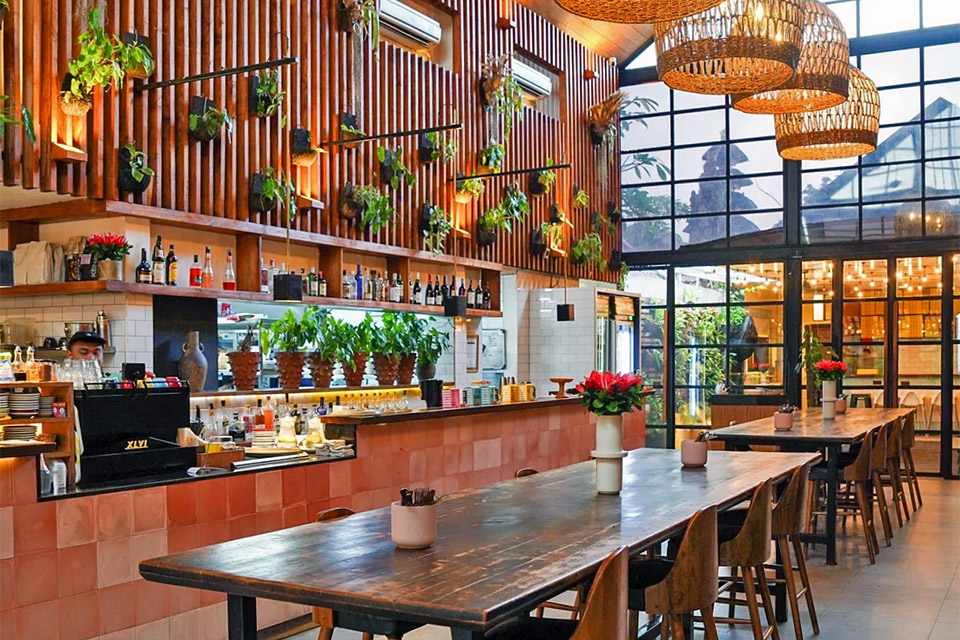
A favorite among families and repeat visitors is Milk & Madu. Known for its welcoming atmosphere, generous portions, and all-day dining approach, it has become something of a neighborhood institution. Whether you are meeting friends for breakfast or enjoying a relaxed family brunch, it is the type of place that encourages lingering.
For a more contemporary café experience, Nude offers beautifully presented dishes, fresh ingredients, and a design-conscious atmosphere that reflects modern Bali dining culture. It has become a popular choice for visitors seeking healthy breakfasts, specialty coffee, and leisurely brunches.
Meanwhile, Sensorium Bali takes a more innovative approach. Combining Australian café culture with Asian influences, it has earned a reputation for creative menus and memorable dining experiences that go beyond typical brunch fare.
Another local favorite is BAKED., a bakery-café that attracts a steady stream of visitors throughout the day. Fresh pastries, artisan breads, coffee, and casual meals make it a practical stop whether you are grabbing breakfast or simply picking up something to enjoy later at your villa.
The beauty of Berawa is that many of these cafés sit within comfortable walking distance of one another, allowing visitors to develop favorite spots and routines without ever needing transportation.
4.2 Restaurants From Around the World
The restaurant scene is one of the strongest reasons people continue choosing Berawa year after year. The variety of restaurants in Berawa Bali is remarkable considering the neighborhood’s relatively compact size.

Italian cuisine has become particularly well represented, with pizza, handmade pasta, wine bars, and contemporary Italian concepts scattered throughout the area. Visitors can move between casual family-friendly dining and more sophisticated evening experiences without traveling far.
Japanese dining has also flourished in Berawa. From contemporary sushi restaurants to izakaya-style venues, the area offers options ranging from quick lunches to carefully crafted tasting experiences.
Indonesian cuisine remains an essential part of the dining landscape as well. Traditional warungs sit alongside modern interpretations of Indonesian and Balinese classics, giving visitors opportunities to explore local flavors in both casual and upscale settings.
Mediterranean-inspired restaurants, healthy cafés, grill concepts, seafood venues, and international fusion restaurants further expand the dining options available.
This diversity means that a week in Berawa rarely feels repetitive from a culinary perspective. In fact, many visitors find themselves extending dinner plans simply because there are so many restaurants they still want to try.
The concentration of dining choices is one reason Berawa increasingly appeals to travelers who view food as an important part of the holiday experience.
3. Beach Clubs & Sunset Venues
Few destinations in Bali offer such convenient access to multiple beach clubs. The collection of beach clubs in Berawa Bali has helped establish the area as one of the island’s most vibrant lifestyle destinations.

Perhaps the most famous is Finns Beach Club. With its beachfront location, multiple pools, sunset views, bars, restaurants, and entertainment programming, Finns has become one of Bali’s best-known lifestyle venues.
Nearby, Atlas Beach Club offers another large-scale beach club experience with extensive facilities, entertainment, and direct beach access. For visitors seeking a slightly different atmosphere, Mari Beach Club presents a more design-focused experience inspired by Balinese aesthetics and culture.
One of the most attractive aspects of staying in Berawa is that many of these venues are accessible without requiring significant transportation planning.
This convenience is a major reason travelers actively search for villas near Finns Beach Club and other beach clubs in the area. Being able to walk or take a very short ride dramatically changes the experience, allowing guests to enjoy sunset drinks, dinner, and evening entertainment without worrying about long journeys afterward.
4. Berawa Beach Itself
While cafés and restaurants receive considerable attention, Berawa’s coastline remains one of its defining features. For travelers interested in staying near Berawa Beach, proximity to the ocean adds another layer of convenience to daily life.
The beach serves many purposes simultaneously.
For surfers, it offers accessible waves and a strong surf culture. Lessons, board rentals, and experienced surfers all contribute to a lively yet approachable environment. For walkers, the beach provides a scenic route for morning exercise and evening strolls. The coastline becomes particularly active around sunset, when visitors and residents gather to enjoy one of Bali’s most consistent daily rituals.
For others, Berawa Beach simply functions as a place to pause.
A coffee by the sand, an afternoon spent watching the surf, or a sunset walk can easily become part of a daily routine when the beach sits only minutes away. This accessibility contributes significantly to Berawa’s reputation as a neighborhood where lifestyle and leisure naturally blend together.
5. Grocery Stores & Daily Essentials
Walkability is not only about entertainment. True convenience also means having easy access to everyday necessities. Fortunately, grocery shopping is another area where Berawa performs exceptionally well. Several major grocery stores in Berawa Bali provide everything from imported products and fresh produce to household essentials and specialty ingredients.

Pepito Market has become a favorite among villa guests due to its broad product range, quality produce, meat selection, bakery items, and international grocery options. For many families and long-stay travelers, it serves as a one-stop shopping destination. Frestive Supermarket offers another modern shopping experience with a strong emphasis on fresh foods, prepared meals, and imported products. Its clean layout and convenient location make it popular among both residents and visitors.
In addition, convenience stores can be found throughout the neighborhood. Whether you need bottled water, snacks, toiletries, phone credit, or a quick late-night purchase, options are rarely far away.
This may seem like a small detail, but it contributes significantly to overall comfort. Being able to buy groceries, grab a coffee, visit the beach, meet friends for dinner, and return to your villa without spending the day navigating traffic is precisely what makes Berawa feel different from many other destinations.
Ultimately, the answer to what makes Berawa special is not one attraction, one restaurant, or one beach club. It is the fact that all of them exist together within a neighborhood designed for living rather than commuting.
And once visitors experience that convenience for themselves, it becomes easy to understand why so many return again and again.
The Secret Shortcuts That Connect Berawa
One of the reasons experienced Bali visitors often develop a strong preference for Berawa has little to do with cafés, restaurants, or beach clubs. It is local knowledge. More specifically, it is the network of smaller roads, neighborhood connections, and alternative routes that allow residents and repeat visitors to move around the area far more efficiently than many first-time travelers realize.
At first glance, Berawa, Canggu, Seminyak, and surrounding neighborhoods may appear heavily dependent on a handful of major roads. Visitors often look at the map, notice Jalan Raya Canggu as the main connector, and assume that every journey must pass through the same busy bottlenecks.
The reality is considerably more nuanced.
While traffic certainly exists throughout Bali’s southwest coast, Berawa benefits from several strategic connections that make everyday movement easier than many neighboring areas. This local advantage is one of the most overlooked reasons why travelers frequently choose Berawa over other locations.
Between Seminyak and Canggu
Geographically, Berawa occupies an extremely attractive position. It sits between Seminyak and central Canggu, allowing visitors to access both destinations relatively easily. This means guests can enjoy the dining, shopping, and lifestyle attractions associated with Seminyak while also benefiting from the surf culture, cafés, and creative energy that have made Canggu internationally popular.
However, proximity alone is not what makes Berawa special. The real advantage lies in the multiple routes available to reach these neighboring areas.
Rather than relying on a single main road, locals often navigate through smaller connecting streets that help reduce exposure to some of the area’s busiest traffic corridors. Visitors who stay in Berawa for more than a few days quickly begin discovering these routes themselves. And once they do, the neighborhood often feels significantly more connected than expected.
The Shortcut Advantage Toward Batu Bolong
One of the most useful local benefits involves access to Batu Bolong and central Canggu. Batu Bolong remains one of Bali’s most popular destinations, attracting surfers, café enthusiasts, digital nomads, and travelers seeking the area’s vibrant social scene.
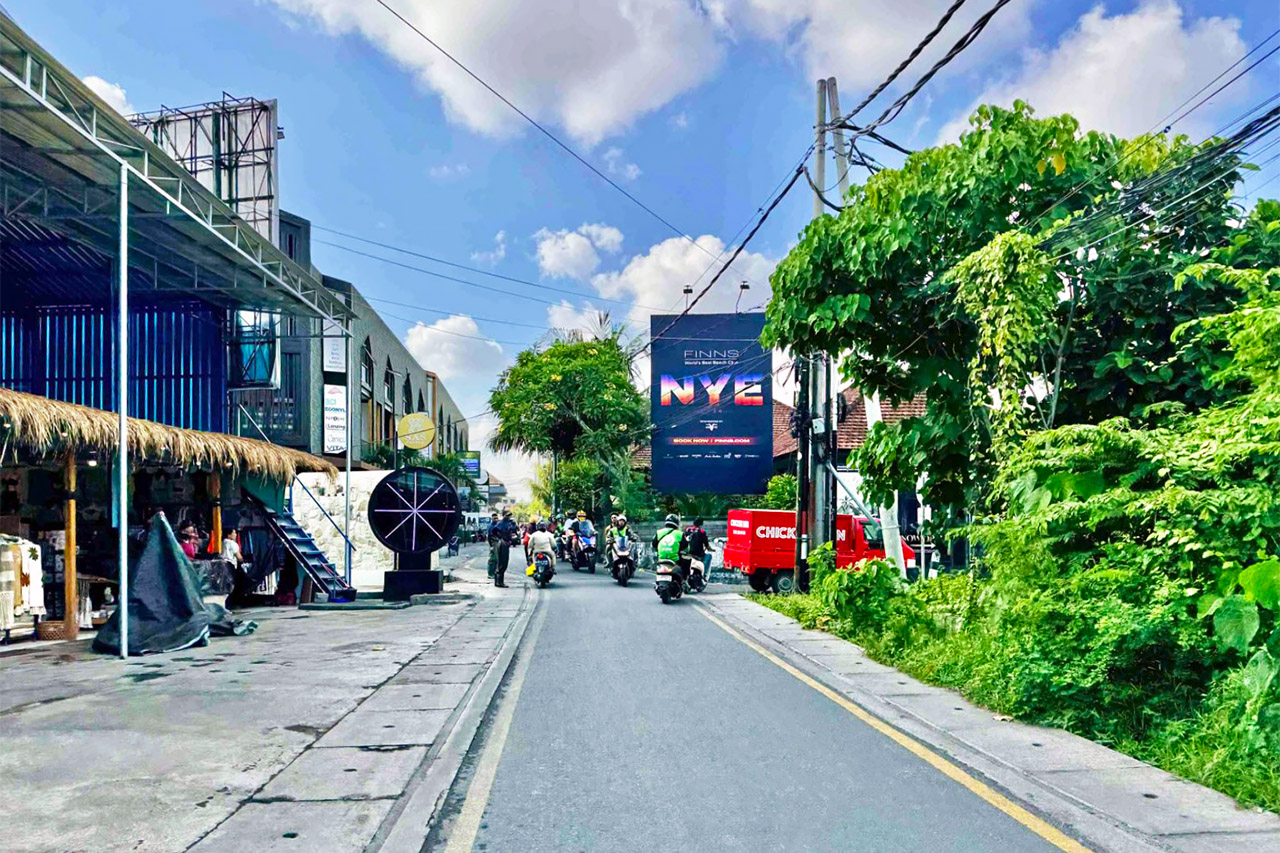
For visitors staying elsewhere, reaching Batu Bolong can sometimes involve navigating congested stretches of traffic. From Berawa, however, a variety of smaller connecting roads help create alternative pathways. While conditions vary depending on time of day and ongoing development, many residents and scooter users regularly use these routes to move between Berawa and Batu Bolong without spending excessive time on larger roads.
The result is a practical sense of connectivity. You feel close to both areas because, in many ways, you are. This flexibility becomes particularly valuable during peak afternoon and sunset hours when traffic tends to increase.
Easier Access Toward Seminyak
The same principle applies in the opposite direction. Many visitors enjoy spending time in Seminyak for shopping, dining, beach clubs, and spa experiences. While the distance itself is not great, traffic can sometimes make journeys feel longer than anticipated. Berawa’s southern connections provide additional options that help distribute movement more effectively.
Instead of viewing Seminyak and Canggu as completely separate destinations, guests staying in Berawa often experience them as part of a broader lifestyle area connected by multiple routes. This strategic position makes Berawa feel remarkably central without requiring travelers to stay directly inside some of the busiest zones.
Avoiding Jalan Raya Canggu Whenever Possible
Any discussion about movement in this part of Bali inevitably leads to one road: Jalan Raya Canggu. The road plays an important role in connecting different parts of the region, but it is also responsible for many of the congestion challenges visitors encounter.
This is one reason searches such as best area to stay in Canggu without traffic continue growing in popularity. Travelers are not necessarily trying to avoid Canggu itself. They are trying to avoid spending their holiday constantly dependent on its busiest transportation corridors.
Berawa provides a practical compromise.
The neighborhood remains close enough to enjoy everything that attracts visitors to Canggu while offering alternative access points that reduce the need to rely exclusively on Jalan Raya Canggu. No destination is completely immune to traffic, particularly in a rapidly growing area like Bali’s southwest coast. However, having options matters. And Berawa offers more options than many people realize.
A Local Advantage That Improves Daily Life
Perhaps the most important aspect of these shortcuts is not that they save a few minutes here and there. It is the cumulative effect they have on daily life.
When moving around becomes easier, people naturally become more spontaneous. Dinner plans become simpler. Coffee runs become quicker. Exploring neighboring areas becomes less intimidating. The psychological barrier created by traffic begins to disappear. This contributes significantly to the overall appeal of Berawa.
Visitors are not just choosing a place to sleep. They are choosing a location that allows them to access more experiences with less effort. And in Bali, where travel time can sometimes have a surprisingly large impact on a holiday, that convenience becomes a genuine luxury.
Why This Matters When Choosing Where to Stay
When comparing Berawa vs Canggu where to stay, many travelers initially focus on accommodation styles, beach access, or nightlife options.
Those factors certainly matter. But mobility matters too. The ability to move efficiently between destinations influences almost every part of a holiday experience. Berawa’s combination of walkability, strategic location, and local shortcut networks creates a level of convenience that is difficult to fully appreciate until you experience it firsthand.
It is one of those advantages that rarely appears in travel brochures yet often becomes one of the strongest reasons people return. Because ultimately, the less time you spend worrying about how to get somewhere, the more time you have to enjoy being there. And that philosophy sits at the heart of what makes Berawa such a compelling place to stay.
Walking vs Scooter: Which Works Better?
One of the questions many travelers ask when planning a Bali holiday is surprisingly practical: Do I actually need a scooter? The answer depends largely on where you stay. In some parts of Bali, transportation quickly becomes a necessity. Distances between attractions can be significant, and daily activities often require frequent trips between cafés, beaches, restaurants, and accommodation.
Berawa is different.
One of the reasons the neighborhood has become increasingly popular among both short-term visitors and long-stay travelers is that it supports multiple ways of getting around comfortably.
You can walk.
You can ride a scooter.
Or, as many experienced visitors eventually discover, you can combine both approaches and enjoy the best of each. For people staying in Berawa Bali, this flexibility becomes one of the area’s most underrated advantages.
Walking Is Better Than Most Visitors Expect
When people imagine Bali, walkability is not usually the first thing that comes to mind. The island is often associated with scooters, ride-hailing apps, and traffic-filled roads.Yet Berawa offers a surprisingly pedestrian-friendly experience compared to many neighboring areas.
Because cafés, restaurants, grocery stores, beach clubs, fitness studios, bakeries, spas, and convenience stores are located relatively close together, many daily activities can be accomplished entirely on foot.
A typical morning might begin with a short walk to a coffee shop. Breakfast may be just a few minutes farther down the street. A grocery stop on the way back to the villa feels easy rather than inconvenient. Later in the day, a walk to the beach for sunset or a nearby restaurant for dinner becomes part of the experience itself.
This type of movement creates a different relationship with the neighborhood. You notice more. You discover more. You develop a stronger sense of place. And perhaps most importantly, you spend less time thinking about transportation.
The Benefits of Walking Go Beyond Convenience
Walking is not simply practical. It also improves the overall quality of a holiday.
A hidden bakery.
When visitors move through Berawa on foot, they often discover places they would have missed otherwise.
A newly opened café.
A local fruit vendor.
A restaurant that was never part of the original plan.
These unexpected discoveries frequently become some of the most memorable parts of a trip. Walking also allows travelers to experience the gradual rhythm of the neighborhood.
Morning feels different from afternoon.
Sunset feels different from dinner time.
The area reveals itself naturally rather than through a car window or behind a scooter helmet.
In many ways, walking transforms Berawa from a destination into a neighborhood.
Scooters Still Have an Important Role
Of course, walking is not always the perfect solution. Bali’s tropical climate can be warm, particularly during midday hours. Some destinations remain too far away for a comfortable walk, and many travelers enjoy exploring beyond Berawa during their stay. This is where scooters become useful.
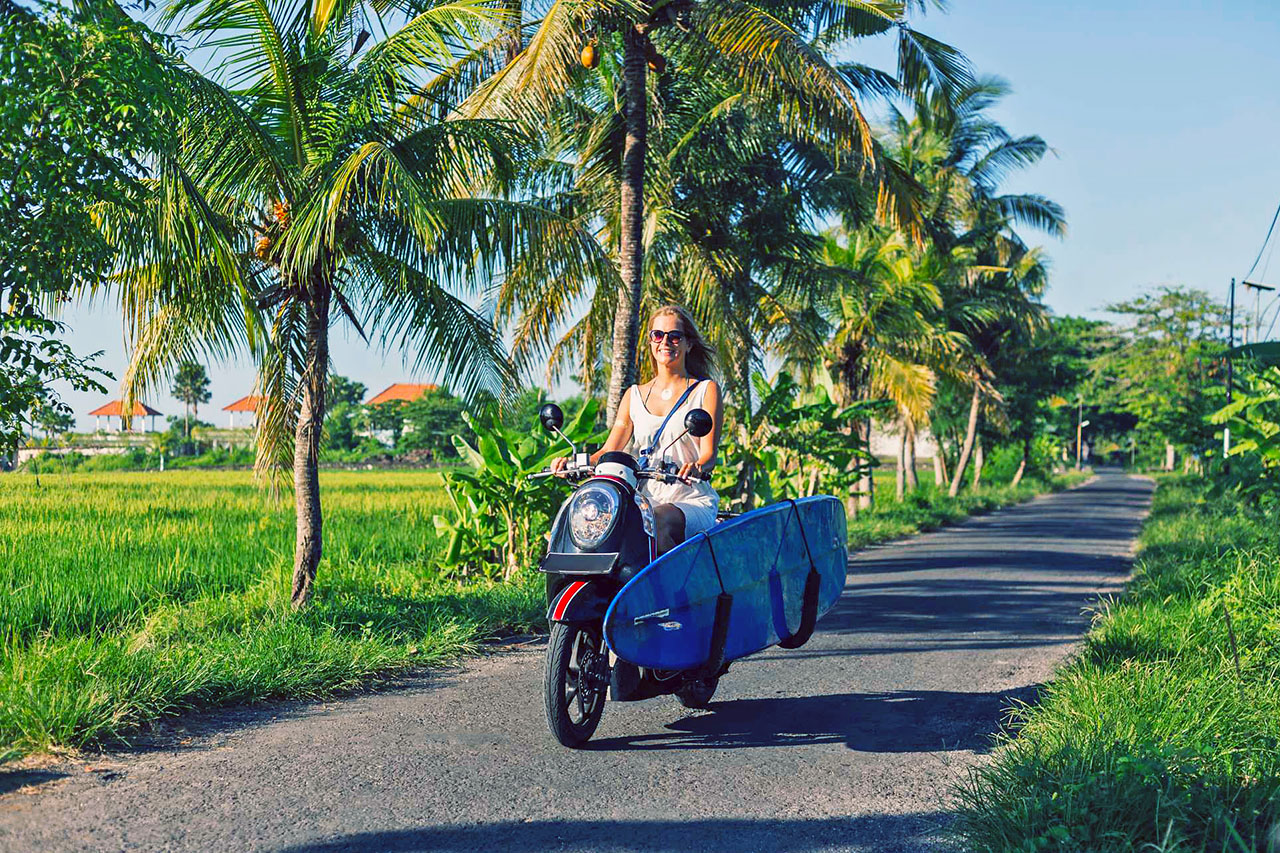
Berawa remains a highly scooter-friendly Bali neighborhood, and renting a scooter is often one of the easiest ways to expand your range without sacrificing flexibility.
A scooter can quickly connect visitors to:
- Batu Bolong
- Pererenan
- Seminyak
- Petitenget
- Echo Beach
- Umalas
- Kerobokan
Journeys that might feel slightly too long on foot become simple and efficient. For travelers who enjoy exploring different parts of Bali every day, scooters provide freedom without requiring dependence on taxis or ride-hailing services. And thanks to Berawa’s strategic location, many nearby destinations can be reached relatively quickly using smaller connecting roads and local shortcuts.
The Best Strategy Is Usually Both
Interestingly, most repeat visitors eventually arrive at the same conclusion: The best approach is not walking or scooters. It is both. Walk when the destination is nearby. Ride when the destination is farther away. This combination creates a balanced and highly enjoyable travel experience.
Use the mornings to explore cafés and breakfast spots on foot. Walk to dinner in the evening. Enjoy sunset at the beach without worrying about parking. Then use a scooter when you want to visit neighboring areas or explore a different part of Bali. The result is maximum flexibility with minimal hassle. You enjoy the benefits of walkability without feeling restricted by geography.
Why Berawa Supports This Balance So Well
Not every destination allows this kind of hybrid lifestyle. Some areas are highly walkable but isolated. Others require transportation for almost everything. Berawa sits comfortably in between. The neighborhood is compact enough that daily essentials remain close by, yet central enough that wider exploration remains easy.
That balance is a major reason so many travelers return. They are not forced into one way of experiencing Bali. They can adapt each day based on mood, weather, energy levels, and personal preferences. Some days become entirely walkable. Other days become adventures on two wheels. Both feel natural. And that flexibility ultimately reflects one of Berawa’s greatest strengths: it makes life easy.
In a destination where transportation can sometimes shape the entire travel experience, having the freedom to choose how you move around is a luxury in itself. Whether you prefer leisurely walks, scooter adventures, or a mix of both, Berawa allows you to spend less time worrying about logistics and more time enjoying everything that brought you to Bali in the first place.
Why Walkability Changes Your Entire Holiday Experience
When travelers choose accommodation in Bali, they often focus on visible features.
The villa.
The pool.
The bedrooms.
The interior design.
The location pin on a map.
All of these things matter, of course. But there is another factor that quietly influences almost every moment of a trip, often without people realizing it until after they arrive.
That factor is walkability.
A truly walkable neighborhood in Bali does more than make transportation easier. It changes the rhythm of a holiday. It changes how people spend their time. It changes how spontaneous they feel.
In many cases, it even changes the memories they take home. This is one reason why travelers who stay in Berawa often describe their experience differently from those who stay in more transportation-dependent areas. The difference is not necessarily what they see. It is how they experience it.
Less Stress, More Holiday
One of the biggest benefits of walkability is surprisingly simple: Less stress. When every outing requires transportation planning, a holiday can begin to feel more structured than relaxing.
You need to check traffic.
You need to arrange transport.
You need to think about parking.
You need to calculate travel times.
You need to leave earlier than you would prefer.
Individually, none of these tasks are particularly difficult.
Collectively, however, they create mental friction.
That friction accumulates throughout a trip.
By contrast, walking removes many of those decisions.
Want coffee? Walk.
Need groceries? Walk.
Feel like watching sunset? Walk.
Hungry for dinner? Walk.
The simplicity of that lifestyle creates a surprisingly powerful sense of freedom. Instead of managing logistics, you simply enjoy the day. And that is ultimately what holidays are supposed to be about.
More Spontaneity Throughout the Day
Perhaps the greatest luxury of walkability is spontaneity. Many of the best travel experiences are not planned. They happen because something catches your attention.
A café looks inviting.
A bakery smells incredible.
A restaurant menu sparks curiosity.
A sunset seems too beautiful to miss.
In destinations where transportation is required for every activity, acting on those impulses becomes more difficult. In Berawa, it often becomes effortless. You can leave the villa without a specific plan and still end up having a memorable afternoon.
A quick walk for coffee might turn into brunch.
Brunch might become a beach visit.
The beach might lead to sunset drinks.
Sunset drinks might become dinner.
The entire day unfolds naturally. This kind of fluid experience is difficult to replicate when every movement depends on arranging transportation.
Discovery Happens Naturally
One of the most overlooked pleasures of travel is discovery. Not the attractions everyone already knows about. The smaller moments. The unexpected places. The local favorites.
Walking encourages this type of exploration. When moving slowly through a neighborhood, you notice details that are easy to miss while driving.
You spot hidden cafés.
You notice boutique shops.
You discover restaurants tucked away behind gardens and courtyards.
You find shortcuts that never appear in travel guides.
You begin to understand how the neighborhood actually works.
This creates a stronger connection with the destination itself. Many visitors arrive in Berawa expecting beach clubs and cafés. What they often remember later are the discoveries they made between those places.
A Better Experience for Families
Families frequently benefit from walkability more than any other type of traveler.
Traveling with children involves enough logistics already. Adding constant transportation requirements only increases complexity. Being able to walk to breakfast instead of organizing a vehicle immediately makes the day easier. The same applies to grocery shopping, casual lunches, convenience store visits, and evening dinners.
Parents gain flexibility. Children spend less time waiting. Schedules become easier to adjust. Unexpected needs become easier to solve. Perhaps most importantly, families can return to the villa quickly whenever necessary.
A forgotten item.
A tired child.
An afternoon rest.
Everything becomes simpler when accommodation sits within walking distance of daily activities. This is one reason why many family travelers increasingly prioritize location over luxury features alone.
A Better Lifestyle for Digital Nomads
Walkability is equally valuable for remote workers and long-stay visitors. Many digital nomads choose Bali not only because of the weather or cost of living but because of the lifestyle. They want a place where work and life integrate naturally.
Berawa supports this exceptionally well. A typical workday might begin with a walk to a café. Lunch can happen nearby. An afternoon break might involve a quick beach visit. Dinner requires no transportation planning. The result is a healthier and more sustainable daily routine.
Instead of spending time commuting between activities, residents and long-stay visitors can focus on work, exercise, social connections, and leisure.
Over weeks or months, those small conveniences create a significantly better quality of life.
Why It Matters More Than Most People Realize
Many travelers do not actively search for walkability when planning a trip.
They search for villas.
Restaurants.
Beach clubs.
Pools.
Views.
Yet once they experience a neighborhood where everything feels accessible, they begin to understand its value. Walkability creates freedom. Freedom creates flexibility. Flexibility creates better experiences. That chain reaction influences almost every day of a holiday. And that is why choosing a location such as Berawa can have a greater impact on a trip than many travelers initially expect.
Because a great Bali villa holiday is not only about where you sleep. It is about how easily you can enjoy everything around you.
When the neighborhood itself becomes part of the experience rather than an obstacle to navigate, the entire holiday feels lighter, richer, and considerably more enjoyable. That is the real power of walkability. And it is one of the reasons Berawa continues to stand out among Bali’s most desirable places to stay.
Villa Manggala – A Walkable Base in the Heart of Berawa
Location is one of the most important factors when choosing accommodation in Bali. Yet many travelers only discover how important it really is after they arrive.

A beautiful villa can lose some of its appeal when every coffee run requires transportation. Likewise, a villa located in the middle of the action may seem attractive at first but become less enjoyable when traffic, noise, and constant activity make it difficult to relax. The ideal situation is often somewhere in between.
Close enough to enjoy everything.
Far enough to enjoy peace and privacy.
This is where Villa Manggala Berawa finds its sweet spot.
Rather than positioning itself as a beachfront property or a remote tropical retreat, Villa Manggala offers something that many modern travelers arguably value even more: a strategic location that supports the lifestyle Berawa is known for. It allows guests to experience the neighborhood largely on foot while still enjoying the comfort and tranquility of a private villa environment.
For visitors specifically searching for villas within walking distance in Berawa, this balance is one of the property’s most compelling advantages.
Not Beachfront — And That’s Actually an Advantage
Many travelers initially assume that being directly on the beach is always the best option. In reality, beachfront locations often come with trade-offs.
Higher noise levels.
More crowds.
Less privacy.
Increased activity throughout the day and evening.
While waking up to ocean views certainly has its appeal, many guests ultimately spend most of their holiday exploring restaurants, cafés, beach clubs, shops, and attractions rather than sitting inside their accommodation.
Villa Manggala takes a different approach.
Rather than placing guests directly in the busiest parts of Berawa, it provides convenient access to those experiences while maintaining a more relaxed residential atmosphere. You remain connected to everything that makes Berawa desirable without feeling like you are living in the middle of a busy commercial district.
For many travelers, that creates a better overall holiday experience.
Walk to Your Morning Coffee
One of the simplest pleasures of staying in Berawa is the ability to begin the day without transportation. Instead of arranging a ride or navigating traffic before breakfast, guests can simply leave the villa and head toward one of the neighborhood’s many cafés.
A morning coffee becomes a short stroll rather than a planned excursion. Breakfast plans become flexible. You can choose based on mood rather than convenience. Perhaps today feels like specialty coffee and fresh pastries. Tomorrow might call for a long brunch with friends. The following day may be a quick coffee before heading to the beach.
Because so many options are nearby, everyday decisions become easy. And easy holidays are often the most enjoyable holidays.
Walk to Restaurants From Around the World
Dining is another area where location dramatically influences the travel experience.
Berawa has evolved into one of Bali’s most exciting culinary neighborhoods. Italian restaurants, Japanese dining venues, Indonesian eateries, Mediterranean concepts, bakeries, wine bars, brunch cafés, and casual local warungs all coexist within a relatively compact area.
Guests staying at Villa Manggala often discover that dinner does not require transportation planning. A short walk can lead to multiple dining choices.
Feeling like pizza? There is an option nearby.
Fresh pasta? Nearby.
Japanese cuisine? Nearby.
Local Indonesian food? Also nearby.
This accessibility contributes significantly to the appeal of staying in a private villa near Berawa restaurants. Instead of organizing evenings around logistics, guests can focus on the experience itself. Dinner becomes spontaneous. Dessert becomes possible. An after-dinner stroll becomes part of the evening.
These small moments create a lifestyle that feels relaxed and effortless.
Walk to Beach Clubs and Sunset Venues
Berawa’s beach club scene is one of the neighborhood’s defining attractions.
Many visitors specifically choose the area because of its proximity to famous venues, sunset experiences, and beachfront entertainment. The ability to walk or take a very short trip to these destinations fundamentally changes how people use them. Rather than committing to a lengthy journey, guests can decide at the last minute to spend an afternoon by the beach.
A casual sunset drink becomes easy.
Meeting friends becomes simple.
Returning home afterward becomes stress-free.
This flexibility encourages people to experience more of what the neighborhood offers. Instead of treating beach clubs as major events that require planning, they become a natural extension of daily life.
Walk to Grocery Stores and Daily Essentials
Walkability is not only about entertainment. True convenience includes practical necessities. One of the reasons Berawa works so well as a holiday destination is that daily essentials remain easily accessible.
Need bottled water? A short walk.
Need groceries for breakfast? Nearby.
Need snacks for the villa? Easy.
Need ingredients for a family dinner? Several options are available.
This becomes particularly valuable for families, long-stay travelers, and guests who enjoy making use of Villa Manggala’s fully equipped kitchen. The ability to shop for ingredients and return quickly to the villa makes self-catering far more enjoyable. It also reinforces the feeling that you are living in the neighborhood rather than merely visiting it.
Return to Peace and Privacy
Perhaps the most important part of the Villa Manggala experience happens after you return.
Berawa is energetic. That energy is part of its appeal.
The cafés are busy.
The restaurants are lively.
The beach clubs are vibrant.
The streets remain active throughout much of the day.
Experiencing that energy is enjoyable. Living inside it 24 hours a day is not always desirable. Villa Manggala offers a welcome contrast. After breakfast, lunch, beach time, shopping, sunset drinks, or dinner, guests can return to a private environment where the pace naturally slows down.
The transition feels immediate.
Outside, there is activity. Inside, there is space.
Outside, there are crowds. Inside, there is privacy.
This balance between accessibility and calm is difficult to achieve, yet it is one of the qualities that makes certain properties feel genuinely comfortable.
A Lifestyle-First Way to Experience Berawa
Ultimately, Villa Manggala’s location is not simply about convenience. It is about lifestyle. The villa does not attempt to compete on beachfront positioning. Nor does it isolate guests from the experiences that make Berawa special. Instead, it occupies a strategic middle ground.
Guests can walk to cafés.
Walk to restaurants.
Walk to grocery stores.
Walk to beach clubs.
Walk toward the beach.
And when the day is done, they can return to a spacious private villa environment designed for rest and relaxation. That combination is increasingly rare along Bali’s busy southwest coast. It is also one of the reasons Villa Manggala continues to appeal to travelers seeking more than just accommodation.
They are looking for a better way to experience Berawa itself. And in a neighborhood where walkability has become one of the greatest luxuries of all, location can make a remarkable difference.
A Typical Car-Free Day in Berawa
One of the best ways to understand what makes Berawa special is to imagine spending an entire day there without using a car.
No taxi bookings.
No negotiating traffic.
No checking travel times.
No sitting in long queues of vehicles wondering where your holiday time is going.
Just a day that unfolds naturally, one experience leading effortlessly into the next.
This is where the real appeal of the Berawa lifestyle Bali becomes clear. While many destinations require constant transportation planning, Berawa allows visitors to enjoy a surprisingly complete day largely on foot. The result feels less like tourism and more like living. And that distinction often becomes one of the most memorable parts of a stay.
A Slow Morning Starts with Coffee
The day begins quietly. The villa is still calm. Sunlight filters through the garden. The air remains cooler than it will be later in the afternoon. Rather than rushing to a schedule, you step outside and take a short walk toward one of Berawa’s many coffee shops.
Within minutes, you have options.
A specialty coffee roaster.
A neighborhood café.
A bakery serving fresh pastries.
A brunch venue already preparing for the morning crowd.
The walk itself becomes part of the experience. Scooters pass by occasionally. Local businesses open their doors. The neighborhood slowly comes to life.
Coffee arrives.
Perhaps a croissant.
Perhaps fresh tropical fruit.
Perhaps simply a flat white enjoyed at a leisurely pace.
There is nowhere urgent to be.
That feeling alone can be surprisingly valuable.
Brunch Without a Plan
After coffee, breakfast gradually becomes brunch. One of the pleasures of Berawa is that plans do not need to be rigid.
You may continue chatting with friends.
You may decide to walk to another café.
You may discover a restaurant you had not noticed before.
The neighborhood encourages spontaneity. This is one reason why so many visitors searching for things to do in Berawa end up enjoying experiences they never originally planned. The best parts of the day often happen by accident.
A recommendation overheard from another traveler.
A menu that catches your attention.
A hidden courtyard café tucked away behind the main street.
Because everything feels close together, changing plans never feels inconvenient.
An Easy Walk Toward the Beach
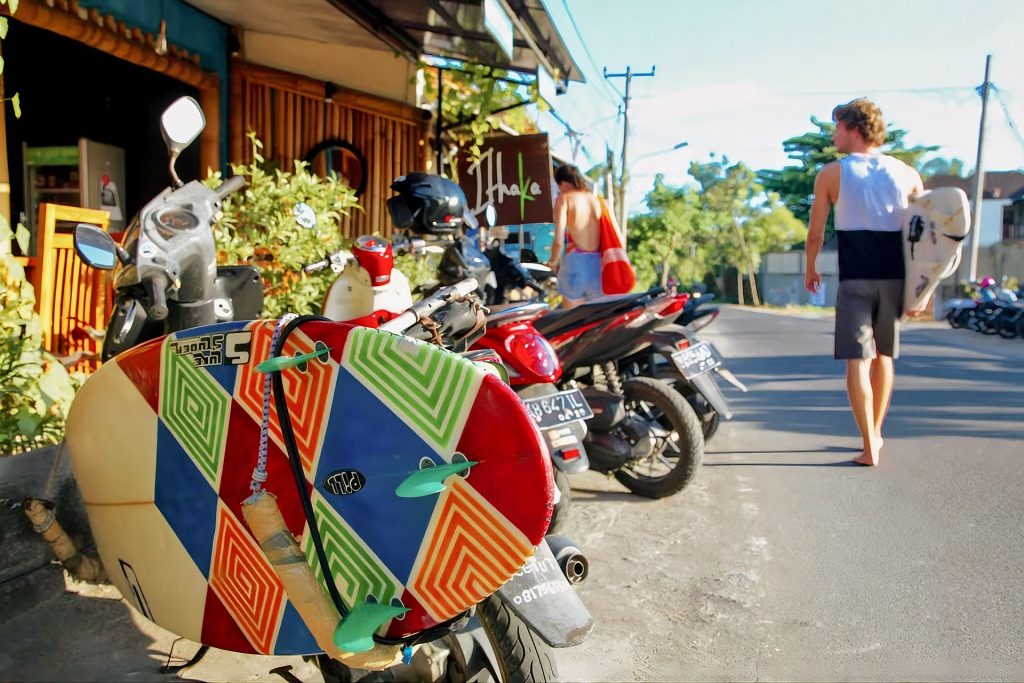
By late morning or early afternoon, the coastline starts calling.
One of Berawa’s greatest strengths is that the beach remains woven into everyday life. Instead of organizing a beach trip, you simply walk toward it. The route itself feels lively. Restaurants, boutiques, convenience stores, and cafés create an active atmosphere that gradually transitions toward the ocean.
Soon, the sound of waves becomes noticeable. The horizon opens up. The beach appears. Some visitors spend the afternoon surfing. Others choose a beach club. Some simply sit with a drink and watch the world go by.
The beauty of Berawa is that there is no right answer.
The neighborhood supports multiple styles of travel equally well.
Pool Time at the Villa
Eventually, the heat of the afternoon encourages a slower pace. This is when many travelers return to their villa. One of the underrated benefits of staying somewhere centrally located is that returning “home” feels easy.
There is no lengthy commute.
No transportation planning.
No logistical effort.
Just a short journey back to the comfort of your accommodation.
At Villa Manggala, this transition feels particularly natural. After the energy of cafés, restaurants, and the beach, the villa provides a different rhythm. The pool becomes inviting. A book appears. Perhaps a nap. Perhaps a cold drink by the water.
The day slows down again. This contrast between activity and relaxation is one of the reasons villa stays often feel more rewarding than traditional hotel stays. You have space to enjoy both.
Dinner Just Around the Corner
As sunset approaches, the neighborhood begins another transformation. Lights appear in restaurant windows. Tables start filling. People gather for dinner. The energy shifts from daytime leisure to evening social life. And once again, transportation is not part of the equation.
Dinner is nearby.
Whether the mood calls for Italian food, Japanese cuisine, Indonesian flavors, Mediterranean dishes, or something entirely different, Berawa offers an impressive range of choices within a relatively small area.
There is no pressure to choose early.
No concern about traffic.
No need to calculate travel times.
You simply walk.
This flexibility often leads to better evenings. Plans remain fluid. Conversations last longer. Dessert becomes easier to justify. The entire experience feels more relaxed.
The Underrated Luxury of Walking Home
After dinner comes one of the most overlooked pleasures of all. Walking home.
Not waiting for transportation.
Not opening ride-hailing apps.
Not sitting in traffic.
Simply strolling back through the neighborhood.
The streets feel different at night. Restaurants glow softly. The air becomes cooler. The pace slows. There is time to reflect on the day. And before long, you are back at the villa. The gate closes behind you.The noise fades. The private space returns.
This simple transition—from vibrant neighborhood to peaceful villa—is something many travelers do not fully appreciate until they experience it firsthand.
Why This Day Feels Different
Looking back, nothing about this day seems extraordinary.
There are no major excursions.
No complicated itineraries.
No ambitious sightseeing schedules.
Yet that is precisely the point.
The day feels enjoyable because it feels effortless.
Coffee, brunch, beach time, pool time, dinner, and a walk home all fit together naturally. Very little energy is spent managing transportation. Very little time is lost moving from one place to another. Instead, nearly every hour is spent enjoying the destination itself. That is the real advantage of a walkable neighborhood.
And it is one of the reasons Berawa continues to attract travelers who value lifestyle as much as attractions. Because sometimes the best holiday experiences are not defined by what you do. They are defined by how easily and naturally you are able to enjoy doing it.
Tips for Enjoying Berawa on Foot
One of the biggest advantages of staying in Berawa Bali is that many of the neighborhood’s attractions are surprisingly accessible without needing a car or scooter. However, like any destination, walking in Bali comes with its own realities.
Berawa is arguably one of the most walkable areas on the island, but it is still Bali. Temperatures are warm, sidewalks can vary in quality, and traffic behaves differently from what some international visitors may be used to. Fortunately, a few simple habits can make exploring the neighborhood on foot both comfortable and enjoyable.
The goal is not to turn your holiday into a fitness challenge. The goal is to make walking feel like a natural extension of the Berawa lifestyle.
Choose the Right Time of Day
Perhaps the most important tip is also the simplest: Walk when Bali is at its most pleasant.
Early mornings and late afternoons are generally ideal. Morning walks often feel particularly enjoyable. Temperatures are cooler, cafés are beginning to open, and the neighborhood has a relaxed atmosphere before the busiest part of the day arrives. It is a wonderful time for coffee runs, beach walks, breakfast outings, or grocery shopping.
Late afternoons are equally appealing. As the heat begins to ease, people emerge from villas, cafés become busier, and the beach starts drawing crowds for sunset. Walking to dinner or sunset drinks often becomes one of the most enjoyable parts of the day.
Midday, particularly during the dry season, can be considerably hotter. Walking is still possible, but many visitors prefer shorter distances or choose shaded routes whenever available.
Adjust Your Sidewalk Expectations
Visitors from major cities sometimes arrive expecting continuous pedestrian infrastructure. Berawa is improving every year, but it remains important to maintain realistic expectations.
Some streets have sidewalks.
Some have partial sidewalks.
Some require sharing space with local traffic.
This is simply part of the experience of exploring Bali. The good news is that many of Berawa’s most popular streets have become increasingly pedestrian-friendly due to the area’s growing popularity among international visitors. The key is to stay aware of your surroundings and maintain a relaxed pace.
Most travelers quickly adapt after a day or two. Rather than viewing walking as urban commuting, think of it as neighborhood exploration.
Stay Hydrated
Bali’s tropical climate can be deceptively demanding. Even when temperatures feel comfortable, humidity can contribute to dehydration more quickly than many visitors expect. If you plan to spend several hours exploring Berawa on foot, carrying water is a good habit.
Fortunately, convenience stores, cafés, supermarkets, and restaurants are abundant throughout the neighborhood. Refreshing drinks are rarely far away. Hydration becomes especially important for visitors who combine walking with beach time, surfing, or outdoor dining.
A simple bottle of water can make a significant difference in overall comfort.
Wear Footwear Designed for Walking
This may seem obvious, yet many travelers underestimate how much walking they actually end up doing in Berawa. Flip-flops are perfect for the beach. They are not always ideal for several kilometers of exploration.
Comfortable sandals, lightweight sneakers, or walking shoes generally provide a better experience, especially if you plan to move between cafés, restaurants, beach clubs, and shops throughout the day. The objective is not athletic performance. It is comfort. When your feet feel good, the neighborhood feels smaller and more accessible.
Pay Attention When Crossing Streets
Crossing roads in Bali can feel unfamiliar for visitors from countries with highly structured pedestrian systems. Traffic often flows continuously, and formal crossings are not always available where you might expect them. The good news is that local driving speeds within Berawa are generally slower than in many larger urban environments.
Patience is important.
Rather than waiting for traffic to stop completely, pedestrians often cross gradually and predictably when safe gaps appear. The key principle is consistency. Make your intentions clear. Avoid sudden movements. Maintain awareness of scooters approaching from different directions.
After a few days, most visitors become comfortable with the rhythm of local traffic.
Evening Walks Are One of Berawa’s Best Experiences
Many travelers discover that some of their favorite walks happen after sunset.
Temperatures become more comfortable. Restaurant lights illuminate the streets. The atmosphere feels lively without becoming overwhelming. Walking to dinner, exploring the neighborhood after a meal, or returning to your villa on foot can become memorable parts of the holiday experience.
This is especially true in Berawa because so many attractions are concentrated within a relatively compact area. Instead of ending the evening with a ride through traffic, you can simply enjoy a relaxed stroll home.
Safety Is Mostly About Awareness
Berawa is generally considered one of Bali’s most comfortable and visitor-friendly neighborhoods. That said, basic travel awareness remains important anywhere in the world.
Keep valuables secure.
Remain attentive around traffic.
Avoid distractions when crossing roads.
If walking very late at night, stick to active and well-lit routes whenever possible. These are simple precautions rather than significant concerns. Most visitors find Berawa welcoming, comfortable, and easy to navigate.
Walkability Is One of Berawa’s Greatest Luxuries
Ultimately, enjoying Berawa on foot is less about technique and more about mindset.
Slow down.
Allow extra time.
Explore side streets.
Stop for coffee.
Browse a bakery.
Watch a sunset.
Take a different route home.
The beauty of Berawa is not that every attraction sits directly next door. It is that enough of them are close enough to make walking feel practical. In a part of Bali often associated with traffic and transportation challenges, that convenience becomes a genuine luxury.
And once visitors experience the freedom of moving around largely on foot, many discover that walking itself becomes one of their favorite parts of staying in Berawa.
The Luxury of Needing Less Transport
When people imagine luxury travel, they often think about larger villas, private pools, premium amenities, ocean views, or personalized service. All of those things certainly contribute to a memorable holiday. Yet after spending time in Bali, many travelers discover that one of the greatest luxuries is something far simpler.
Time.
Not more activities.
Not more schedules.
Not more transportation.
Just more time to actually enjoy the destination. And that is precisely where Berawa quietly distinguishes itself from many other places along Bali’s southwest coast.
Time Is the Real Luxury
Every holiday comes with a limited number of mornings, afternoons, sunsets, and evenings. Whether you stay for three days, one week, or an entire month, the experience is ultimately shaped by how you spend those hours. This is why location matters so much. Not because a location sounds impressive on a map. But because it determines how much of your day is spent living versus commuting.
Many visitors arrive in Bali expecting to move effortlessly between cafés, beaches, restaurants, beach clubs, and attractions. What they sometimes discover is that transportation can consume a surprising portion of their holiday.
Twenty minutes here.
Thirty minutes there.
An hour lost in traffic.
Another ride needed for dinner.
Individually, these moments seem small.
Collectively, they can reshape an entire trip.
A truly walkable area in Berawa Bali offers a different experience. Instead of planning your day around transportation, transportation becomes almost irrelevant.
You wake up.
You decide what you feel like doing.
And then you simply go.
Coffee is nearby.
Breakfast is nearby.
The beach is nearby.
Restaurants are nearby.
Groceries are nearby.
Sunset is nearby.
That convenience creates a freedom that many travelers do not fully appreciate until they experience it firsthand.
Less Driving, More Enjoying
One of the recurring themes throughout this guide has been simplicity. Not because Berawa lacks excitement. Quite the opposite. The neighborhood offers some of Bali’s most vibrant cafés, restaurants, beach clubs, fitness studios, bakeries, and lifestyle venues.
The difference is that enjoying them often requires remarkably little effort.
A short walk replaces a long ride.
A spontaneous dinner replaces transportation planning.
An afternoon at the beach becomes easy rather than logistical.
Even simple errands feel less disruptive.
This changes the entire rhythm of a holiday.
Days become more flexible.
Plans become more spontaneous.
Experiences become more enjoyable.
You begin saying “yes” more often because doing things feels easier. A sunset drink sounds appealing because it is only a short walk away. Dessert after dinner sounds reasonable because you do not need to think about getting home.
An early morning coffee run becomes part of the routine rather than an organized outing. These may seem like small details. Yet they are often the details that define how a destination feels.
Berawa Supports a Different Kind of Bali Experience
There are many wonderful places to stay in Bali. Each offers its own personality and appeal. What makes Berawa special is the balance it achieves. The neighborhood is energetic without being overwhelming.
Popular without feeling inaccessible.
Developed without losing its sense of community.
It combines elements that are often difficult to find together.
Beach culture.
Dining culture.
Residential comfort.
Convenience.
Walkability.
Lifestyle.
Visitors can enjoy world-class beach clubs one moment and peaceful residential streets the next. They can spend the morning at a café, the afternoon by the pool, and the evening at a restaurant without ever feeling rushed.
This balance is one of the primary reasons Berawa continues attracting families, couples, groups of friends, long-stay travelers, and digital nomads alike. The neighborhood adapts to different travel styles because it was built around everyday living rather than purely tourism.
Why Villa Manggala Fits This Lifestyle
Location alone is not enough. To fully benefit from Berawa’s walkability, you also need a villa that supports the lifestyle the neighborhood encourages. This is where Villa Manggala Berawa fits naturally into the experience.
The villa is not positioned as a beachfront property.
It is not hidden away in a remote corner of the island. Instead, it occupies one of the most practical positions a traveler could ask for. Close enough to reach cafés, restaurants, grocery stores, beach clubs, and Berawa Beach with ease. Far enough away to provide privacy, comfort, and a welcome sense of calm at the end of the day.
The result is a balance that many travelers find increasingly valuable.
You can enjoy everything. And then step away from it when you are ready.
The neighborhood remains accessible.
The villa remains peaceful.
Together, they create a travel experience that feels effortless.
The Freedom to Experience Berawa Your Way
Perhaps the greatest advantage of staying in Berawa is that there is no single correct way to enjoy it.
Some visitors fill their days with café hopping and restaurant discoveries. Others focus on surfing and sunsets. Some spend afternoons at beach clubs. Others prefer quiet mornings by the pool. Many alternate between all of the above.
The neighborhood accommodates each style equally well.
What connects these experiences is accessibility. The freedom to move through the area easily. The ability to say yes to opportunities without worrying about logistics.The opportunity to spend more time enjoying Bali and less time getting from one place to another.
That freedom is becoming increasingly rare. And it is one of the reasons Berawa continues to stand out among Bali’s most desirable places to stay.
If your idea of a great holiday includes excellent food, vibrant cafés, beautiful sunsets, beach club energy, local convenience, and the ability to experience it all without constantly dealing with traffic, Berawa offers a compelling answer.
And if you want a comfortable, spacious base that places all of those experiences within easy reach, Villa Manggala Berawa makes that lifestyle remarkably easy to enjoy. Stay at Villa Manggala and discover one of Bali’s greatest modern luxuries: needing less transport so you can spend more time enjoying everything that makes Berawa special.